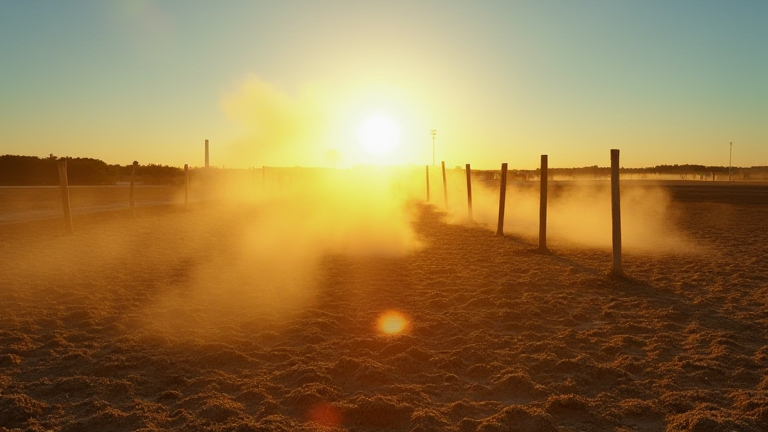
TL;DR: Global heat waves are severely disrupting agricultural productivity by accelerating crop maturation and increasing water stress across major growing regions. Advanced sensor networks and drought-resistant genetically modified crops are emerging as critical technological solutions to mitigate these devastating impacts on global food security.
The Escalating Crisis
Recent meteorological data confirms that extreme temperature anomalies are no longer isolated events but recurring disruptions to the global food supply chain. From the wheat belts of North America to the rice paddies of Southeast Asia, rising thermal stress is fundamentally altering growing cycles. These heat waves reduce photosynthesis efficiency and accelerate evapotranspiration, leading to significant yield losses. Farmers report unprecedented challenges in maintaining consistent output levels, forcing a rapid reevaluation of traditional farming practices. The economic implications are staggering, with commodity markets reacting violently to every new heat advisory issued by major weather services. This volatility affects everything from grocery prices to international trade agreements, creating a ripple effect that extends far beyond the field.
If you want to dig deeper, check out our guide on Space Tourism Offers Suborbital Flights to the Public.

Technological Interventions
In response to this crisis, the agricultural technology sector is deploying innovative hardware and software solutions. IoT-based soil moisture sensors now provide real-time data, allowing for precise irrigation management that conserves water while maximizing crop health. These devices utilize low-power wide-area networks to transmit data from remote fields to centralized dashboards. Furthermore, satellite imagery analysis powered by machine learning algorithms can detect early signs of heat stress in crops before visible symptoms appear. This predictive capability enables farmers to take preemptive action, such as adjusting shade structures or activating emergency cooling systems. The integration of these technologies represents a paradigm shift from reactive to proactive farming, leveraging big data to combat climate-induced volatility.
Industry Adaptation
The industry is also witnessing a surge in investment for climate-resilient crop varieties. Biotechnology firms are accelerating the development of heat-tolerant strains of staple crops like maize, soy, and wheat. These genetically modified organisms are engineered to maintain cellular integrity and metabolic function under high-temperature conditions. Additionally, vertical farming and controlled environment agriculture are gaining traction as alternatives to traditional open-field farming. These facilities use LED lighting and hydroponic systems to create optimal growing conditions independent of external weather patterns. While initially costly, these methods offer a stable production source that is immune to external thermal fluctuations. The convergence of biotechnology, robotics, and data analytics is reshaping the agricultural landscape, offering hope for sustained productivity in a warming world.
FAQ
Q: How do heat waves specifically affect crop yields?
A: Heat waves accelerate crop maturation, reducing the time for grain filling and nutrient accumulation, which leads to smaller harvests and lower quality produce.
Q: What role do IoT sensors play in modern farming?
A> IoT sensors monitor soil moisture, temperature, and humidity in real-time, enabling farmers to optimize irrigation schedules and reduce water waste during dry spells.
Q: Are genetically modified crops safe for consumption?
A: Yes, regulatory agencies worldwide have deemed current heat-tolerant GMOs safe, as they undergo rigorous testing for nutritional equivalence and environmental impact before approval.
Leave a Reply