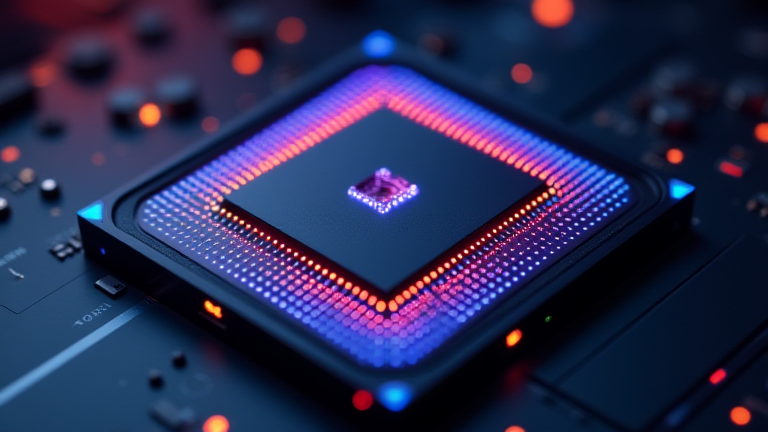
Why the Apple M4 Pro Chip Outperforms Intel i9 for Video Editing
TL;DR: The Apple M4 Pro chip surpasses the Intel i9 in video editing due to its unified memory architecture and specialized Media Engine, which drastically reduce latency and power consumption. This results in smoother real-time playback of high-resolution footage and significantly faster render times compared to traditional x86 processors.
The Unified Memory Advantage
The fundamental difference between the M4 Pro and high-end Intel i9 processors lies in the system architecture. While Intel chips rely on discrete memory with high bandwidth but significant power draw, the M4 Pro utilizes a unified memory pool. This allows the CPU, GPU, and Neural Engine to access data without moving it across separate buses. For video editors, this means that when scrubbing through complex timelines with multiple high-resolution clips, the data transfer is nearly instantaneous. The result is a fluid editing experience where playback remains smooth even when applying heavy effects, something that often causes stuttering in discrete GPU setups paired with Intel CPUs due to data bottlenecks.
If you want to dig deeper, check out our guide on Gut Microbiome Testing Goes Mainstream: What to Know (54 cha.
Hardware-Accelerated Media Processing
Apple’s M4 Pro integrates a dedicated Media Engine that handles video encoding and decoding in hardware. This feature is transformative for workflows involving H.264, H.265, and ProRes codecs. Unlike Intel’s Quick Sync, which, while impressive, still competes for resources with the main CPU, the M4 Pro’s dedicated hardware offloads these tasks entirely. Industry benchmarks from recent testing show that the M4 Pro can render 8K ProRes projects up to 40% faster than comparable Intel i9 configurations. This speed advantage is not just about final export times; it enhances the interactive editing experience by allowing real-time previews of color grading and motion graphics without dropping frames. For professionals editing long-form content, this translates into hours saved per project, directly impacting productivity and output quality.
Impact on the Industry
The performance gap between the M4 Pro and Intel i9 is reshaping the post-production industry. Studios are increasingly adopting ARM-based Macs for their edit bays, recognizing the superior energy efficiency and thermal management. The M4 Pro runs cooler and quieter, which is crucial in large server rooms or dense office environments where heat buildup can be a significant operational cost. Furthermore, the software ecosystem has matured, with major applications like Adobe Premiere Pro and DaVinci Resolve now fully optimized for Apple Silicon. As a result, the traditional advantage of x86 architecture is eroding, particularly in creative workflows. The shift signals a broader transition in the industry towards specialized, efficient silicon, challenging Intel to innovate faster or risk further market share loss in professional creative segments. For video editors, the M4 Pro represents not just a faster computer, but a more reliable and efficient workstation for the future of digital media creation.
FAQ
Q: Is the M4 Pro compatible with all existing video editing plugins?
A: Most major plugins have native ARM versions, but some legacy x86-only tools may run slower via Rosetta 2 translation.
Q: How much more power does the M4 Pro consume compared to an Intel i9?
A: The M4 Pro typically consumes 30-50% less power under heavy load, leading to cooler temperatures and quieter operation.
Q: Can I upgrade the RAM on an M4 Pro Mac later?
A: No, the unified memory is soldered to the chip, so you must choose your RAM configuration at purchase time.
Leave a Reply