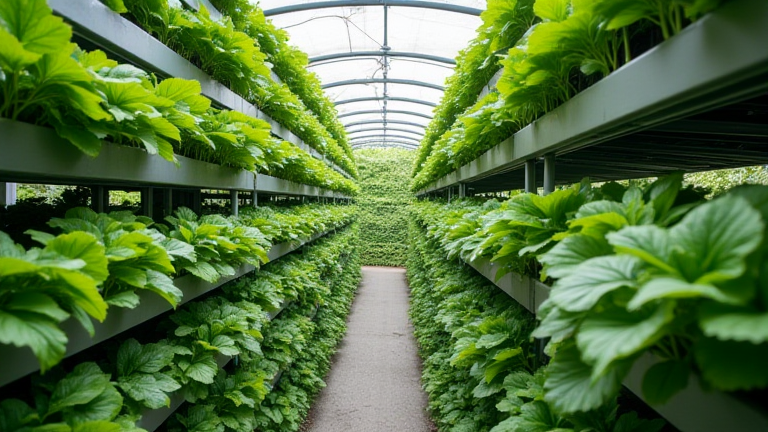
TL;DR: Urban vertical farming drastically reduces carbon footprints by eliminating long-distance transportation and energy-intensive cold storage. This localized production model allows consumers to access fresher produce while supporting a resilient, low-emission food system.
The Green Revolution in Concrete Jungles
For decades, the average apple traveled over two thousand miles before reaching your kitchen, a journey that contributed significantly to global greenhouse gas emissions. Today, a quiet transformation is occurring in the heart of major cities. Vertical farms are rising like skyscrapers of sustainability, stacking crops in controlled environments to bring food production closer to the plate. This shift is not just an agricultural experiment; it is a fundamental reimagining of our relationship with food, culture, and the planet.
If you want to dig deeper, check out our guide on 7 Simple Health Habits That Will Transform Your Daily Routin.
Breaking the Supply Chain Bottleneck
The traditional supply chain is a logistical nightmare for the environment. Trucks, ships, and planes burn fossil fuels to move goods, while refrigeration systems consume vast amounts of electricity. By moving production into urban centers, vertical farms collapse this long, energy-hungry chain. The distance between harvest and consumption shrinks from thousands of miles to mere blocks. This proximity means no refrigerated trucks idling in traffic, no plastic-wrapped crates sitting in warehouses for weeks, and no spoilage rates that often exceed thirty percent. The result is a dramatic reduction in scope three emissions, which are often the hardest for companies to manage but account for the bulk of a product’s environmental impact.
A Cultural Shift in Taste and Trust
Beyond the environmental metrics, vertical farming is reshaping our food culture. There is a renewed appreciation for hyper-local ingredients, a trend that mirrors the global movement toward transparency and authenticity. When you can see exactly where your lettuce was grown, just a few subway stops away, the abstract concept of “organic” becomes tangible. This transparency fosters a deeper connection between the eater and the source. It encourages a mindset of stewardship, where personal growth includes making conscious choices that align with ecological values. The flavor profile of vertically grown produce is often superior due to the immediate harvest-to-shelf time, offering a culinary experience that is both fresher and richer in nutrients.
The Future is Local and Looping
As climate change accelerates, the resilience of local food systems becomes paramount. Vertical farms are not immune to challenges, such as the high initial capital costs and energy demands for lighting. However, advancements in renewable energy integration and water recycling technologies are rapidly making these operations more sustainable. The water used in hydroponic systems is recirculated, using up to ninety-five percent less than traditional agriculture. This closed-loop system is a stark contrast to the leaky, wasteful nature of rural monocultures. By embracing urban vertical farming, we are not just cutting emissions; we are building a food culture that is efficient, transparent, and deeply rooted in the communities we live in. The future of dining is not just about what is on the plate, but how it got there, and vertical farming is leading the way toward a cleaner, greener table.
FAQ
Q: Is vertical farming energy-intensive?
A: While lighting requires electricity, the energy used for heating, cooling, and transport is significantly lower than traditional agriculture, especially when powered by renewables.
Q: Can vertical farms grow all food types?
A: They are best suited for leafy greens, herbs, and strawberries. Staple crops like wheat or corn require too much space and light to be economically viable in vertical setups.
Q: How does this affect food prices for consumers?
A: Prices are currently higher due to technology costs, but as efficiency improves and supply chain savings are passed on, costs are expected to become more competitive with conventional produce.
Leave a Reply