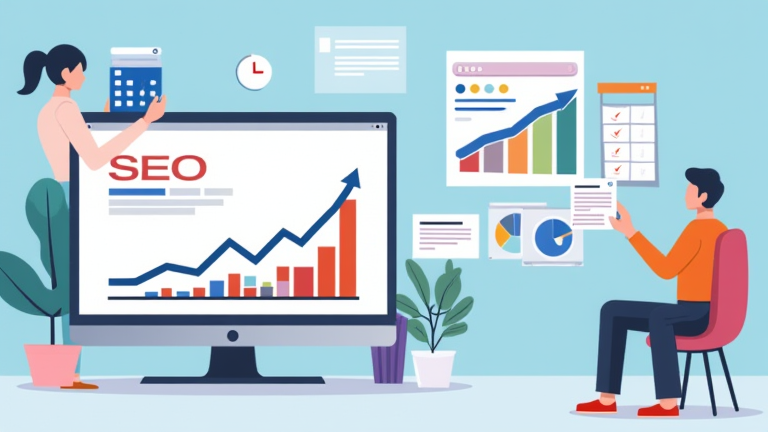
TL;DR: Rank higher on Google by mastering technical foundations, content relevance, and authority signals. Follow this 7-step SEO tutorial to improve crawlability, match search intent, and earn backlinks that boost your domain trust.
Step 1: Audit Your Current Indexing Status
Open Google Search Console (GSC) and click “Pages” under Indexing. Look for errors like “Crawled – currently not indexed” or “Discovered – currently not indexed.” Fix these by ensuring your XML sitemap is submitted, internal links point to orphan pages, and no noindex tags block important content. Tip: Use the URL Inspection tool to request re-indexing after fixes.
If you want to dig deeper, check out our guide on Thankful Thursday: 10 Free SEO Tools for Content Creators.
Step 2: Perform Keyword Research with Intent Mapping
Use tools like Google Keyword Planner or Ahrefs to find terms with monthly volume between 100–1,000 and low competition. But don’t just pick keywords—map them to intent: informational (blogs), commercial (product comparisons), or transactional (buying guides). For example, “best running shoes” needs a listicle, while “buy Nike Pegasus 40” needs a product page. Tip: Include long-tail variants (e.g., “best running shoes for flat feet”) in your headings and body text.
Step 3: Optimize On-Page Elements (Title, Meta, H1)
Write a title tag under 60 characters with your primary keyword near the front. Write a meta description under 155 characters that includes a call-to-action (e.g., “Learn the 7 steps now”). Use exactly one H1 tag per page containing your main keyword, and break content with H2s and H3s that include secondary keywords. Tip: Add your keyword in the first 100 words of the first paragraph—Google weighs early placement.
Step 4: Improve Core Web Vitals and Mobile Usability
Run Google’s PageSpeed Insights. Target a Largest Contentful Paint (LCP) under 2.5 seconds, First Input Delay (FID) under 100ms, and Cumulative Layout Shift (CLS) under 0.1. Compress images (but do not use any tags in your article—use CSS backgrounds or lazy-loading via JavaScript instead). Ensure your font sizes are at least 16px on mobile and buttons are 48px tall. Tip: Use a CDN and enable browser caching for faster repeat visits.
Step 5: Create Content That Matches Search Intent (Not Just Keywords)
Look at the top 3 results for your target keyword. If they are listicles, write a listicle. If they are videos, embed one (but again, no tags). Structure your article to answer the “People Also Ask” questions. Use tables, bullet points, and short paragraphs (2–3 sentences max). Tip: Add a “Key Takeaways” box at the top—Google favors content that satisfies users quickly.
Step 6: Build Internal Links with Descriptive Anchor Text
Link from your new page to at least 3 older, related pages on your site. Use exact-match or partial-match anchor text (e.g., “keyword research guide” instead of “click here”). Also, add links from your homepage or high-authority pages to your new content. Tip: Check for broken internal links using Screaming Frog and fix them monthly—broken links waste crawl budget.
Step 7: Earn High-Quality Backlinks (Digital PR + Guest Posts)
Reach out to blogs in your niche offering a free tool, original data, or an expert quote. Write 2–3 guest posts per month on reputable sites (DA 50+) with a contextual link back to your page. Also, list your site in relevant directories like Crunchbase or industry-specific roundups. Tip: Monitor your backlinks in GSC under “Links”—disavow spammy ones only if they are clearly manipulative.
FAQ
Q: How long does it take to rank higher
Leave a Reply