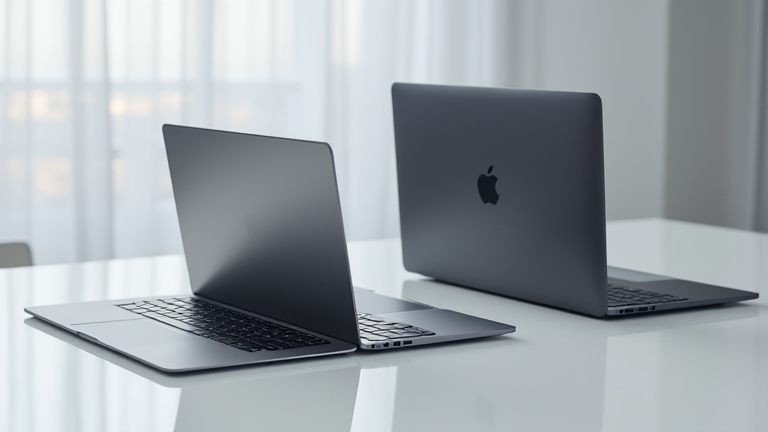
TL;DR: The M3 MacBook Pro is the superior choice for power users and creatives who need advanced media processing and AI acceleration, while the M2 remains the best value proposition for general productivity and budget-conscious students. If you can afford the premium, the M3’s architectural improvements in GPU and neural engine provide a significant long-term advantage that justifies the higher price tag for most professional workflows.
The Architectural Leap
The transition from the M2 to the M3 chip represents a subtle but profound shift in Apple’s silicon strategy. While the M2 focused on refining the efficiency and performance balance established by the M1, the M3 introduces a hybrid architecture that significantly enhances both CPU and GPU capabilities. The M3 utilizes a more advanced 3-nanometer process, allowing for denser transistor placement and improved power efficiency. This is not just about raw speed; it is about how efficiently the chip handles complex, multi-threaded tasks. For users who frequently run virtual machines or compile large codebases, the M3’s increased core count and improved memory bandwidth deliver tangible benefits that the M2 simply cannot match. The industry impact of this shift is substantial, as it further entrenches Apple’s lead in mobile workstation performance, forcing competitors to rethink their own silicon roadmaps to remain competitive in the premium laptop segment.
If you want to dig deeper, check out our guide on Buy It for Multiple Lives: Ultimate Guide.
Graphics and Media Capabilities
One of the most distinct differences between the two chips lies in their graphical processing units. The M3 features a GPU with hardware-accelerated ray tracing and mesh shading, capabilities that the M2 lacks. This is a game-changer for 3D artists, video editors, and gamers who utilize macOS for creative projects. Hardware ray tracing allows for real-time lighting and reflection calculations that were previously reserved for high-end desktop GPUs. Furthermore, the M3’s neural engine has been upgraded to handle machine learning tasks more efficiently. This is critical in an era where AI is becoming integrated into everyday software, from photo editing to language processing. The M2, while still capable, struggles to keep pace with the increasing demands of AI-centric applications. For the average user, the difference in everyday tasks like web browsing or document editing may be negligible, but for creative professionals, the M3 offers a future-proofing advantage that extends the useful life of the laptop.
Value and Industry Context
When evaluating which laptop to buy, the context of your workflow is paramount. The M2 MacBook Pro is currently available at a lower price point, often through education discounts or previous generation sales. For students, writers, and developers working on standard web applications, the M2 provides excellent performance per dollar. It remains a robust machine that will easily last five to seven years for typical use cases. However, the industry is moving rapidly toward AI-driven tools and higher-resolution content creation. The M3’s superior capability in these areas means that it will remain relevant longer as software requirements become more demanding. Apple’s ecosystem advantage, including seamless integration with iPad and iPhone, adds further value to either choice, but the M3 ensures that you are not bottlenecked by hardware limitations as new software features roll out. The decision ultimately hinges on whether you view your laptop as a tool for today’s tasks or an investment for the next decade of technological evolution.
FAQ
Q: Is the M3 significantly faster than the M2 for everyday tasks?
A: No, for basic tasks like web browsing, email, and office suites, the difference is negligible; both chips are more than powerful enough, making the M2 the better value for general users.
Q: Does the M3 support ProRes RAW video editing better?
A: Yes, the M3’s improved GPU and dedicated media engine offer better performance and efficiency when processing high-bitrate ProRes RAW footage compared to the M2.
Q: Should I wait for the M4 chip before buying?
A: Unless you are on a tight budget or have specific needs that the M2 meets perfectly, waiting is rarely advisable; the M3 offers a significant generational leap that is worth the investment now.
Leave a Reply