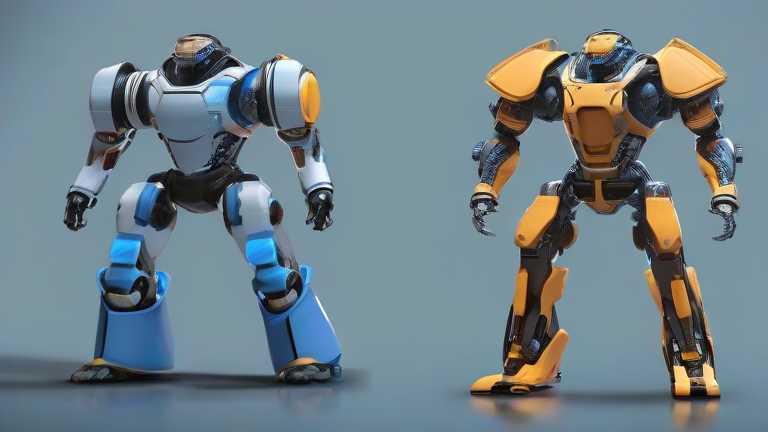
TL;DR: We are fixated on humanoid robots because they mirror our own social rituals, yet hybrid wheel-leg designs offer superior practicality for real-world navigation and efficiency. The obsession with human-like forms is a cultural bias, not an engineering necessity, leading us to ignore the more capable, versatile machines that could actually serve us better today.
The Mirror in the Machine
There is a peculiar comfort in seeing our own faces reflected in the eyes of a machine. It is a seductive notion that if a robot looks like us, it can understand us. This anthropomorphic bias drives billions in investment and fuels endless media cycles focused on bipedal walkers. We watch them stumble, stand up, and mimic our gestures, and we feel a kinship. But when we step back from the glamour of the tech gala and look at the mundane reality of daily life, the question arises: are we building the right tool for the job? Or are we merely building a prop for a play we are starring in?
If you want to dig deeper, check out our guide on EES Rollout Megathread: What to Expect From 10 April.
Consider the travel experience. Imagine a future where you are waiting for a train in a bustling, uneven station. A humanoid robot, with its high center of gravity and complex balance algorithms, struggles to navigate the cracked pavement and crowded turnstiles. It is energy-intensive to move, slow to react, and prone to tipping over if bumped. Now, contrast this with a hybrid wheel-leg design. These machines can roll at high speeds on flat surfaces, saving energy, but can deploy legs to climb stairs, jump over curbs, or traverse rough terrain. They are not trying to be us; they are trying to be efficient. For a traveler, the latter is far more desirable. A service robot that can effortlessly move from the smooth floor of an airport terminal to the gravel path of a rural train stop is a utility, not a novelty.
The food industry offers another compelling angle. In a restaurant, a humanoid server might feel charming, perhaps even comforting, as it carries a tray with the delicate grace of a human. However, in a high-volume kitchen or a busy dining room, that same rigidity is a liability. A hybrid robot can quickly traverse the smooth kitchen floor to deliver a dish, then use its legs to navigate a raised patio or a uneven outdoor seating area. It does not need to mimic the human gait to be useful. It needs to be adaptable. The obsession with the human form distracts us from the engineering marvels of adaptability that hybrid designs offer. We are prioritizing aesthetic familiarity over functional superiority.
This preference is deeply rooted in culture and personal growth. We define ourselves by our bodies. To create a machine that looks like us is to validate our own importance. We are obsessed with the wrong design because we are afraid of the idea that our biology is not the optimal template for intelligence or service. Accepting that a wheeled, multi-legged machine might be better at serving our needs requires a shift in mindset. It requires us to decouple value from appearance. It is a step toward a more pragmatic, less ego-driven future of technology.
As we move forward, the most successful robots will likely be those that do not look like us. They will be the ones that can navigate the chaotic, imperfect world we live in without the burden of mimicking our frailties. We should stop watching robots try to walk like humans and start celebrating the machines that can do what humans cannot, with greater speed, stability, and grace. The future is not about looking like us; it is about serving us better.
FAQ
Q: Why are humanoid robots more popular in media?
A: Media favors human-like characters because they are easier for audiences to empathize with and understand, driving higher engagement and narrative interest.
Q: Are hybrid wheel-leg robots more energy efficient?
A: Yes, because rolling is generally more energy-efficient than walking, allowing hybrids to conserve power while still retaining the ability to climb when necessary.
Q: Will humanoid robots ever replace hybrid designs entirely?
A: Unlikely, as hybrid designs offer superior versatility for industrial and service applications where speed and stability are critical over anthrop
Leave a Reply