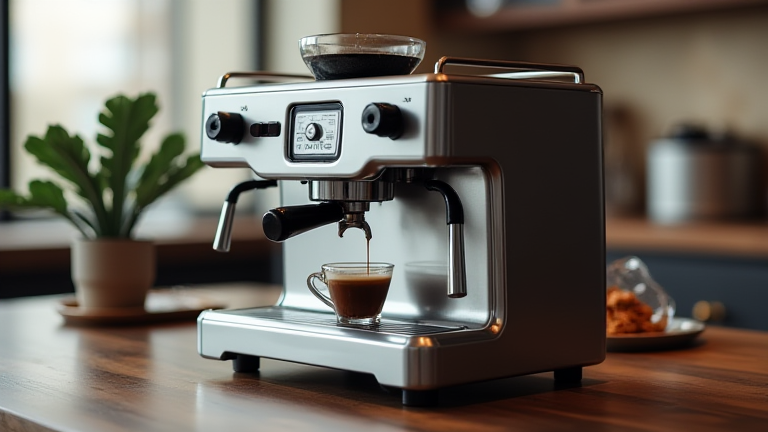
TL;DR: Prioritize a robust 58mm portafilter and a reliable steam wand for consistent shot quality and microfoam creation. Ensure the machine offers precise temperature and pressure control to match your specific taste preferences and bean choices.
The Heart of Your Coffee Routine
Buying an espresso machine is an investment in your daily ritual. While price points vary wildly, the core features determine whether your mornings will be smooth or frustrating. Understanding the mechanical and digital elements that drive performance allows you to bypass marketing fluff and focus on what actually matters for your cup. This guide breaks down the critical components you must evaluate before clicking that buy button.
If you want to dig deeper, check out our guide on Why Is My Outreach Failing? Fix Your Strategy Now.
Pressure and Temperature Stability
Consistency is the golden rule of espresso. Look for machines with a PID (Proportional-Integral-Derivative) controller. This technology monitors the boiler temperature in real-time, adjusting the heating element to maintain stability within a narrow range. Without a PID, your shots may vary in extraction due to temperature fluctuations, resulting in sour or bitter notes. Additionally, pump pressure matters. A 9-bar pump is standard, but some advanced models offer 15-bar pumps. Note that 15 bars is often used for pre-infusion, not extraction, but the ability to control pre-infusion can help blooming grounds evenly, leading to a more balanced flavor profile. Manual lever machines offer this control through physical force, while electric machines may offer digital profiles.
Portafilter and Group Head Design
The portafilter is where the magic happens. Always opt for a 58mm portafilter if you are serious about coffee. It provides a larger surface area for the coffee puck, allowing for better extraction and easier distribution. Avoid 54mm or 51mm filters often found in cheaper models, as they limit your ability to dose accurately. The group head should be a single boiler or dual boiler design if you want to pull shots and steam milk simultaneously. Single boiler machines require you to switch modes, which wastes time and energy. Heat exchanger machines offer a middle ground, allowing simultaneous operation but with less temperature precision. For the best experience, a dual boiler setup ensures that your water for extraction stays at 195-205°F while your steam wand operates at full power without cooling the boiler.
Steam Wand Performance
If you drink cappuccinos or lattes, the steam wand is non-negotiable. Look for a commercial-grade steam wand. It should be powerful enough to create dense microfoam in under thirty seconds. The wand’s positioning should be ergonomic, allowing you to move the pitcher easily without burning your hand. Some machines feature a “wobble” feature for texturing milk, which is a nice bonus but not essential for beginners. Ensure the wand has sufficient reach to accommodate different pitcher sizes without forcing you to move the machine.
Build Quality and Maintenance
Materials matter for longevity. Stainless steel boilers are standard, but the internal components should be durable. Check if the machine includes a water filter system to prevent scale buildup, which can damage the pump and boiler over time. Ease of cleaning is another factor; removable group heads make deep cleaning easier, while fixed heads require more careful maintenance. Look for machines with easy-access drip trays and removable water tanks if you are not installing a permanent water line.
Comparison: Entry Level vs. Step Up
Entry-level machines typically feature a single boiler and a basic PID or no PID at all. They are great for learning but lack precision. Step-up models include dual boilers or heat exchangers, 58mm portafilters, and advanced PID controls. The price difference can be significant, but the improvement in shot consistency is substantial. For example, a $500 machine might produce average shots, while a $1,500 machine will consistently produce café-quality espresso. Consider your budget against the frequency of use. If you drink espresso daily, the higher end is worth the investment.
Call to Action
Ready to upgrade your coffee game? Start by identifying your
Leave a Reply