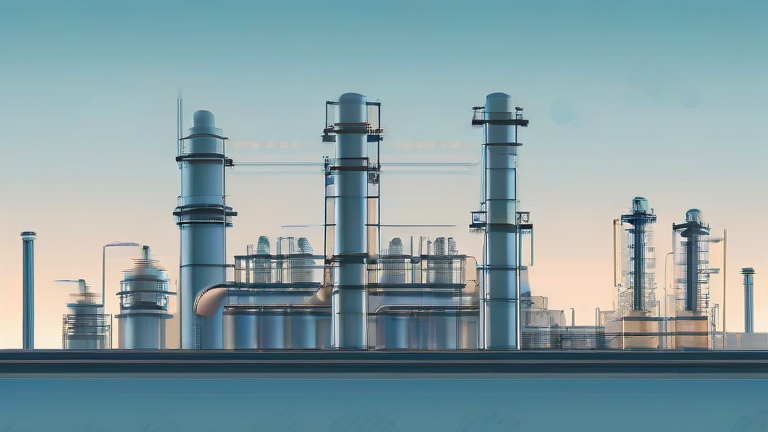
Carbon Capture for Industry: How It Scales & Benefits

The global imperative to decarbonize heavy industry has moved beyond theoretical modeling into active, large-scale deployment. Carbon Capture, Utilization, and Storage (CCUS) is no longer a niche technology but a critical infrastructure component for sectors like cement, steel, and chemical manufacturing. As regulatory pressures tighten and carbon pricing mechanisms expand across Europe and North America, industrial leaders are increasingly viewing CCUS not as an optional compliance measure, but as a strategic necessity for long-term viability.
The latest developments in direct air capture (DAC) and point-source capture technologies have significantly improved efficiency. Modern amine-based scrubbing systems now operate at lower energy penalties than their predecessors, reducing the energy overhead by up to twenty percent. Simultaneously, solid sorbent technologies are gaining traction due to their lower regeneration energy requirements. These advancements are crucial because the economic viability of carbon capture hinges entirely on minimizing the energy cost associated with separating CO2 from industrial flue gases.
Scaling these technologies requires robust infrastructure. The most successful models involve clustering emission sources near geological storage sites, creating industrial symbiosis hubs. For instance, the Northern Lights project in Norway is pioneering a cross-border transport and storage solution, allowing multiple industries to share the costly pipeline and injection infrastructure. This collaborative approach drastically reduces the capital expenditure for individual companies, making the economics of capture more favorable. Recent specifications for high-pressure CO2 transport pipelines indicate a shift toward standardized modular designs, which can be assembled rapidly on-site, further accelerating deployment timelines.
The benefits extend beyond environmental compliance. Companies that integrate CCUS early are positioning themselves to produce low-carbon materials, which command premium prices in green supply chains. Steel producers, for example, are using captured CO2 to create synthetic fuels or polymer precursors, turning a waste product into a revenue stream. This circular economy approach mitigates the financial burden of carbon taxes while opening new market opportunities. Furthermore, the creation of specialized jobs in engineering, logistics, and monitoring is revitalizing industrial regions previously reliant on fossil-fuel
Leave a Reply