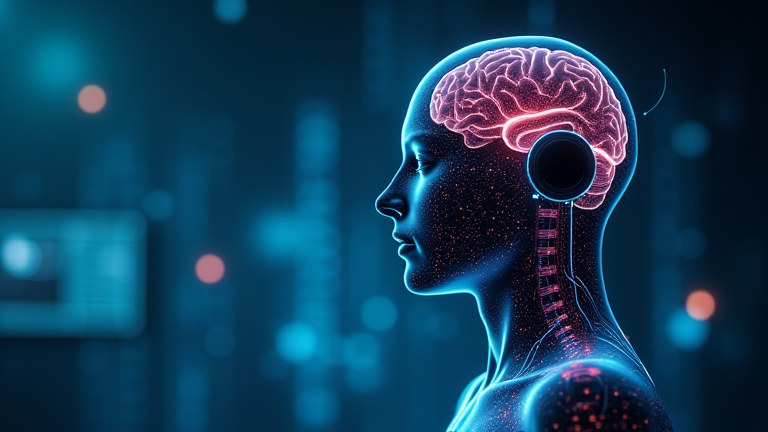
Brain-Computer Interfaces: New Hope for Paralysis Patients
TL;DR: Recent advancements in high-bandwidth Brain-Computer Interfaces (BCIs) have enabled paralyzed patients to control digital devices and prosthetic limbs with unprecedented speed and precision. These non-invasive and minimally invasive systems are rapidly transitioning from clinical trials to commercial viability, offering a tangible path to restored independence.
The landscape of neurotechnology is undergoing a profound transformation, driven by the urgent need to restore motor function for individuals with spinal cord injuries, amyotrophic lateral sclerosis (ALS), and other neurological conditions. For decades, BCIs remained confined to theoretical research, but the last five years have seen a surge in practical applications. The core innovation lies in the ability to decode neural signals with minimal latency, allowing for real-time interaction between the human brain and external hardware. This technological leap is not merely an academic achievement; it represents a critical shift in how society approaches disability and rehabilitation, promising to redefine the quality of life for millions worldwide.
If you want to dig deeper, check out our guide on BCI Implants Restore Natural Speech for Paralyzed Patients.
Latest Technological Developments
The most significant recent breakthroughs focus on reducing the invasiveness of implantation while simultaneously increasing signal fidelity. Traditional BCIs often required surgical removal of skull bone to place electrodes directly on the cerebral cortex, a procedure carrying substantial risks of infection and tissue damage. Newer platforms, such as those utilizing endovascular stent electrodes, offer a less invasive alternative. These devices are delivered via the jugular vein to the brain’s surface, eliminating the need for craniotomy. Furthermore, artificial intelligence algorithms have been integrated into the signal processing pipeline. These AI models learn the unique neural signatures of each user, adapting in real-time to improve decoding accuracy. Recent trials have demonstrated that users can type at speeds exceeding 40 words per minute using thought-controlled interfaces, a rate comparable to average smartphone typing speeds. This level of performance was previously unimaginable and marks a critical threshold for practical daily use.
Another major development is the integration of sensory feedback loops. Early BCIs allowed users to output commands but provided no sensory input, creating a disconnect that hindered complex motor tasks. Modern systems now incorporate closed-loop feedback, where the prosthetic limb or digital cursor sends tactile or visual information back to the brain. This bidirectional communication allows patients to “feel” the objects they are grasping or the texture of surfaces they are touching, significantly enhancing the usability and naturalness of the interface. The hardware specs supporting these systems are equally impressive. Current high-end BCI arrays feature over 1,000 recording channels, capable of capturing microelectrocorticography signals with a sampling rate of 20 kHz. Data transmission occurs via Bluetooth Low Energy or Wi-Fi, ensuring low power consumption and secure, high-throughput communication with external processors.
Industry Impact and Future Outlook
The commercial implications of these advancements are vast, attracting significant investment from both established tech giants and specialized neurotech startups. The BCI market is projected to reach several billion dollars within the next decade, driven by the growing aging population and increased incidence of neurodegenerative diseases. Manufacturers are focusing on miniaturization and battery life, aiming to create fully implantable, wireless systems that require no external hardware. This shift will reduce the burden on patients, allowing them to move freely without tethered cables or bulky external units. Regulatory agencies, including the FDA and CE, are working to streamline approval pathways for these life-changing devices, recognizing their potential to alleviate severe medical burdens. However, challenges remain, particularly regarding long-term biocompatibility and data privacy. As BCIs become more prevalent, the security of neural data will be a paramount concern, requiring robust encryption standards to protect users’ cognitive privacy. Despite these hurdles, the trajectory is clear: BCIs are moving from the laboratory to the bedside, offering a beacon of hope for those who have lost mobility. The convergence of advanced materials science, machine learning, and neuroscience is creating a new paradigm in medical technology, one where the boundaries of human capability are expanded rather than defined by physical limitations.
FAQ
Q: Are current Brain-Computer Interfaces safe for long-term use?
A: While early trials show promising safety profiles, long-term biocom
Leave a Reply