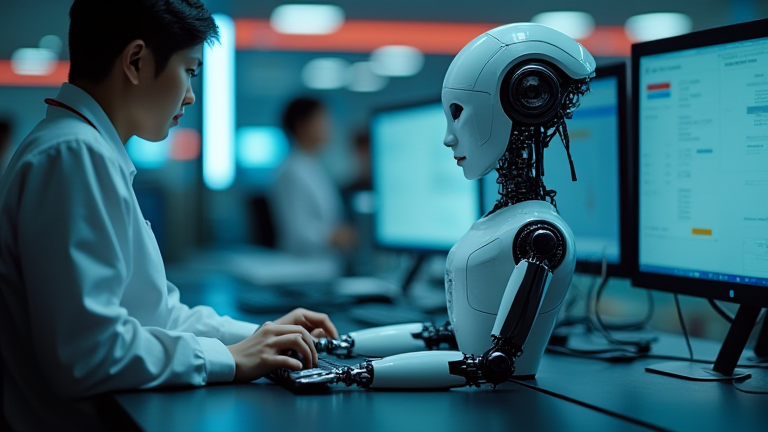
TL;DR: AI automation is rapidly displacing entry-level positions across South Korea’s corporate sector, with young workers facing unprecedented unemployment rates as generative models replace routine cognitive tasks. This structural shift forces a painful transition for recent graduates who previously relied on junior roles for career entry, fundamentally altering the nation’s labor market dynamics.
The Automation Wave Hits Seoul’s Corporate Hubs
South Korea is witnessing a seismic shift in its employment landscape, driven by the aggressive adoption of artificial intelligence tools in finance, media, and administrative sectors. Major conglomerates, including Samsung and Hyundai, are integrating advanced large language models to streamline operations, resulting in significant workforce reductions. Unlike previous industrial revolutions that primarily affected manual labor, this new wave targets white-collar jobs, specifically those requiring data processing, basic coding, and content generation. Young professionals, often defined as those under thirty, are bearing the brunt of this change. These roles traditionally served as the primary stepping stone for university graduates, offering essential on-the-job training and mentorship. Now, algorithms can perform these tasks with greater speed, accuracy, and lower overhead costs.
Technological Specifications Driving Displacement
The technology behind this displacement is sophisticated. Modern AI systems utilize transformer architectures capable of understanding context, generating code, and drafting legal documents with minimal human intervention. These systems are not merely automated scripts but adaptive engines that learn from vast datasets. In the financial sector, AI-driven analytics platforms can now assess credit risk and manage portfolios without the need for junior analysts. Similarly, in customer service, intelligent chatbots handle complex queries, reducing the demand for support staff. The efficiency gains are undeniable, with companies reporting up to forty percent reductions in operational costs for specific departments. However, this efficiency comes at a steep social price, as the entry-level pipeline dries up.
Industry Impact and Social Consequences
The impact extends beyond individual layoffs. It creates a paradox where experienced senior workers remain secure while new entrants struggle to find footholds. This “missing middle” phenomenon threatens long-term innovation, as fresh perspectives are filtered out before they can mature. The Korean government is responding with policy debates on universal basic income and reskilling initiatives, but the transition remains fraught with uncertainty. Young workers are increasingly turning to freelance work or pursuing further education, hoping to differentiate themselves from AI capabilities. Yet, the sheer pace of technological advancement outstrips traditional educational reforms. As companies prioritize cost-efficiency, the social contract of lifelong employment erodes further. This era demands a redefinition of skill valuation, emphasizing creativity and emotional intelligence over routine execution. The challenge for Korea is not just economic but societal, requiring a holistic approach to workforce adaptation.
FAQ
Q: Which industries are most affected by AI job cuts in Korea?
A: The finance, media, and administrative sectors are experiencing the highest rates of displacement due to AI integration.
If you want to dig deeper, check out our guide on OpenAI Reported Goldman Sachs Analyst to FBI Over ChatGPT Ch.
Q: Why are young workers disproportionately impacted?
A: Entry-level roles that previously served as training grounds for graduates are being automated, blocking traditional career entry paths.
Q: What technologies are driving this labor shift?
A: Advanced large language models and transformer-based architectures are replacing routine cognitive tasks with high efficiency.
Leave a Reply