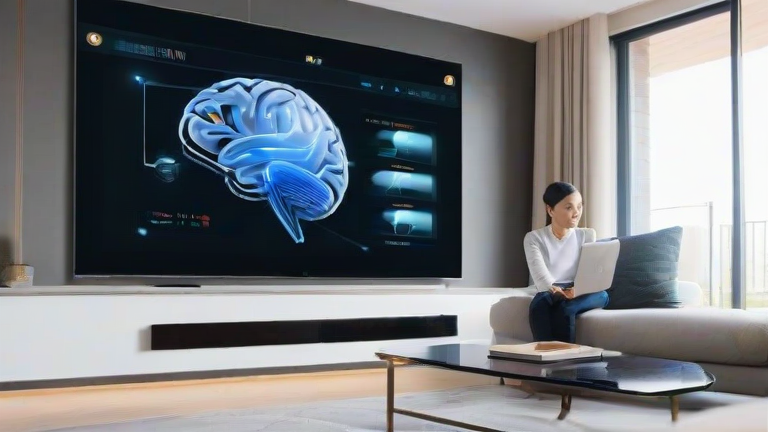
Brain-Computer Interfaces: Control Smart Home With Your Mind
TL;DR: Brain-computer interfaces allow users to control smart home devices directly through neural signals, eliminating the need for physical interaction. While current technology requires a learning period and offers limited command sets, it represents a transformative step toward seamless, intuitive home automation for individuals with mobility challenges.
Feature Highlights
The latest generation of consumer-grade brain-computer interfaces (BCIs) focuses on non-invasive headbands that detect electroencephalogram (EEG) signals. These devices translate specific mental patterns, such as focused attention or muscle tension, into digital commands. Key features include a user-friendly mobile app that maps mental cues to specific IoT actions, such as turning lights on or off, adjusting thermostat temperatures, or playing music. The hardware is designed for comfort, featuring lightweight, adjustable straps and long-lasting battery life that supports up to ten hours of continuous use. Furthermore, advanced machine learning algorithms adapt to the user’s unique neural signature over time, reducing false positives and improving command accuracy significantly within the first few weeks of usage.
If you want to dig deeper, check out our guide on How to Choose the Best Mechanical Keyboard Switches.
Comparisons
When comparing BCI technology to traditional voice assistants, the primary advantage is independence from vocal cord function and ambient noise. In a quiet environment, voice control is often faster and more precise. However, in noisy households or for users who are unable to speak, BCI offers a superior alternative. Compared to gesture-based controls, which require specific hand movements, BCI removes the physical burden entirely. This is particularly beneficial for individuals with paralysis or severe motor impairments. On the other hand, voice and gesture controls are generally more affordable and have a broader range of supported commands. BCI devices are currently a premium investment, costing significantly more than standard smart speakers or motion sensors. The trade-off is clear: you pay a higher initial price for a highly personalized, accessibility-focused experience that bypasses physical limitations entirely.
Call-to-Action
Are you ready to redefine your living space? Imagine waking up and simply thinking about raising the blinds, without moving a muscle. The future of home automation is not about shouting at a speaker or waving your hands in the air; it is about seamless, mind-driven control. If you value accessibility, innovation, and a futuristic lifestyle, now is the time to explore this groundbreaking technology. Visit our store today to view the full lineup of compatible BCI headbands and smart home hubs. Don’t wait for the future to come to you—command it with your thoughts. Start your trial period now and experience the freedom of intuitive control. Your mind is the ultimate remote.
FAQ
Q: Do I need to perform surgery to use these devices?
A: No, current consumer models use non-invasive EEG sensors worn on the head, requiring no surgical procedures or implants.
Q: How long does it take to learn the controls?
A: Most users achieve basic proficiency within one to two weeks of consistent daily practice using the provided training app.
Q: Can it control any smart device?
A: It works best with devices integrated into major smart home ecosystems like Alexa, Google Home, or Apple HomeKit via compatible hubs.
Leave a Reply