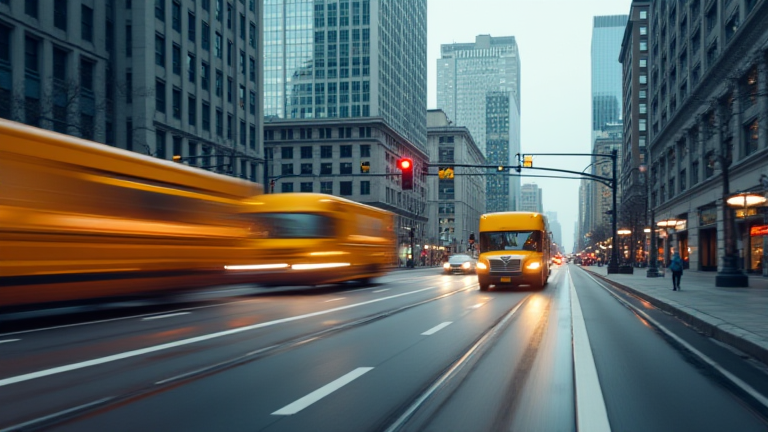
TL;DR: Micro-fulfillment hubs place compact, automated storage-and-pick systems in or near city neighborhoods, cutting the last-mile distance between warehouse and doorstep and shortening delivery times to minutes or hours. For your health, faster delivery is only a win if you use the saved time for movement, sleep, and home-cooked meals—not for extra scrolling and sedentary convenience ordering.
Urban delivery has quietly become a health issue. The average American spends about 55 minutes a day on food preparation and cleanup, and delivery apps promise to reclaim that time. Micro-fulfillment hubs—small robotic warehouses tucked into parking garages, retail backrooms, and transit-adjacent lots—make near-instant delivery possible by stocking only high-turnover items within a few miles of customers. The question worth asking isn’t whether the package arrives faster, but what you do with the minutes you get back.
If you want to dig deeper, check out our guide on 7 Lifestyle Hacks for a Happier, Healthier You.
Why Speed Alone Won’t Make You Healthier
Research on “time scarcity” suggests saved time rarely converts automatically into rest or exercise; it often gets absorbed by more screen time. A 2023 study in Nature Human Behaviour found that convenience-oriented food environments are associated with higher calorie intake and lower diet quality, largely because quick options cluster around ultra-processed foods. Micro-hubs can deliver fresh produce in 20 minutes—but they can equally deliver ice cream in 10. The infrastructure is neutral; the habit is not.
Four Science-Backed Ways to Use the Speed
1. Bank the minutes for movement. Adults need 150 minutes of moderate activity weekly. If a hub saves you 30 minutes of errands twice a week, schedule a brisk walk into that slot immediately—implementation intentions (“when X, I will Y”) roughly double follow-through in behavioral studies.
2. Order the perimeter, not the center. Use rapid delivery for produce, dairy, and staples from the grocery “perimeter,” and keep ultra-processed snack purchases for planned trips. A 2021 Cell Metabolism trial showed that even two weeks of ultra-processed eating increased calorie intake by about 500 calories daily.
3. Protect your sleep window. Late-night delivery notifications fragment sleep. Set app notifications to silent after 9 p.m.; sleep regularity is a stronger predictor of health outcomes than sleep duration alone in recent cohort research.
4. Walk the last block. Meet couriers at the building entrance or a nearby corner. Adding 500–1,000 steps per delivery sounds trivial, but pooled across a week it contributes meaningfully to the 7,000-step threshold linked with lower all-cause mortality.
FAQ
Q: Do micro-fulfillment hubs increase pollution and harm health?
A: They can reduce per-package emissions by shortening trips and enabling bike or EV couriers, but consolidation matters—fewer, batched deliveries beat many single-item orders. Choose retailers that report electric fleet use.
Q: Is fast grocery delivery bad for my diet?
A: Not inherently. Studies link convenience to poorer choices only when quick options are ultra-processed. Stock your hub basket with produce and protein first, and treat rapid delivery as a tool for fresh food, not snacks.
Q: How can I keep delivery from making me sedentary?
A: Pair every order with a micro-commitment: a five-minute walk, ten bodyweight squats, or standing during the wait. Habit-stacking—attaching a new behavior to an existing cue—is one of the best-supported strategies in behavior-change research.
Leave a Reply