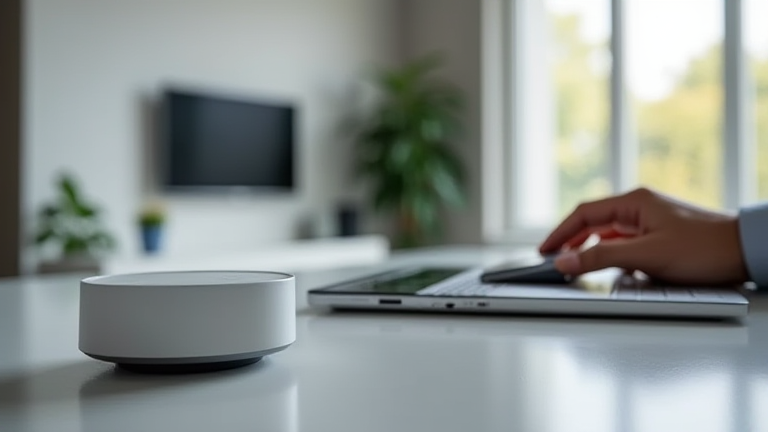
TL;DR: Smart home devices now integrate medical-grade sensors—from radar-based sleep trackers to contactless blood pressure monitors—turning everyday fixtures into passive health monitors. These devices shift healthcare from reactive clinic visits to continuous, ambient monitoring at home, though accuracy and privacy remain key adoption hurdles.
The smart home is quietly becoming a health clinic. Over the past two years, major platform vendors and specialized startups have embedded biometric sensing into devices people already own—lights, speakers, mirrors, and even toilets—moving health monitoring from wearables on the wrist to the environment itself.
If you want to dig deeper, check out our guide on 7 Simple Lifestyle Changes for Better Health and Happiness.
Radar and mmWave Lead the Sensing Shift
Millimeter-wave radar has emerged as the breakout technology. Unlike cameras, radar preserves privacy while detecting subtle movements, including respiration and heart rate. Google’s second-generation Nest Hub uses Soli radar to track sleep without a wearable, sensing breathing patterns and movement through the night. Amazon has followed with contactless sleep and apnea detection features on newer Echo and Halo ecosystems, while startups like Vayyar and Sleepiz offer standalone radar modules for OEMs building the capability into monitors, lamps, and bedside devices.
Blood Pressure Without a Cuff
Perhaps the most significant clinical milestone is cuffless blood pressure. Samsung’s Galaxy Watch and partner health platforms have pushed optical and pulse-wave analysis forward, but the home-fixture angle is newer: bathroom mirror prototypes and smart scales now claim pulse-transit-time-based readings. Regulatory clearance remains the gatekeeper—only a handful of consumer devices hold FDA or CE marks for blood pressure, and most home devices are positioned as wellness tools rather than diagnostic instruments.
Air, Light, and the Indoor Environment as Health Data
Health monitoring also extends beyond the body. Smart thermostats and air purifiers from Google Nest, Dyson, and Airthings now log PM2.5, CO₂, and VOC levels, correlating them with sleep and respiratory outcomes. Smart lighting systems from Philips Hue and others adjust circadian spectra based on detected sleep patterns, closing the loop between sensing and intervention—arguably the smart home’s real advantage over a standalone wearable.
Specs That Matter
Buyers should scrutinize sampling rates (radar sleep tracking typically samples at 10–20 Hz), sensor fusion (radar plus PPG plus temperature yields better accuracy), on-device processing versus cloud upload, battery or mains dependency, and—critically—regulatory status. A device labeled “wellness” is not a medical device, and its readings should not guide treatment decisions.
Industry Impact
The shift pressures traditional medical device makers and opens a data pipeline for telehealth providers. Insurers and employers are already piloting ambient monitoring for chronic disease management. But privacy regulation (GDPR, HIPAA-adjacent rules) and the FDA’s evolving stance on general wellness products will determine how fast these features ship. The likely outcome: a two-tier market—wellness-grade ambient sensing everywhere, and a smaller, certified tier for clinical use.
FAQ
Q: Are smart home health devices as accurate as medical equipment?
A: Generally no. Most are wellness-grade and use indirect sensing like radar or optical pulse analysis; only devices with FDA or CE clearance should be trusted for diagnostic or treatment decisions.
Q: Do radar-based sleep trackers record video or images?
A: No. Millimeter-wave radar detects motion and micro-movements as radio reflections, not visual imagery, which is why it’s favored for bedroom privacy.
Q: Can these devices replace a doctor’s visit?
A: Not currently. They excel at longitudinal trend detection and early-warning signals, but they complement rather than replace clinical assessment and validated medical testing.
Leave a Reply