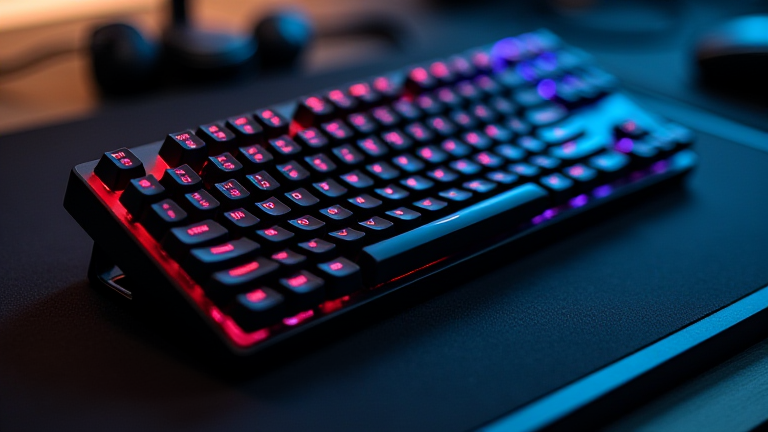
TL;DR: Prioritize hot-swappable sockets, gasket mounting, and per-key RGB with south-facing LEDs. Also demand QMK/VIA firmware, pre-lubed switches, a solid aluminum case, and tri-mode connectivity for future-proof performance.
1. Hot-Swappable Sockets (Now with Optical-Switch Support)
The biggest shift in 2024-2025 is the move from soldered PCBs to universal hot-swap sockets that accept both mechanical and optical switches. Look for sockets with 5-pin support and metal-reinforced slots—these now handle Hall-effect and magnetic switches (like Gateron’s Magnetic Jade) without firmware hacks. This lets you change switch feel in seconds, and new optical variants offer 0.2ms actuation, which esports pros are adopting for ultra-low latency.
If you want to dig deeper, check out our guide on How to Set Up a Raspberry Pi 5 as a Home Media Server.
2. Gasket-Mount + Multi-Layer Damping
Gasket mounts are no longer a premium-only feature. The latest boards use silicone or PORON foam gaskets with a “leaf-spring” plate design, reducing hollowness and giving a deeper, thockier sound. Pair this with 3-5 layers of case foam (PE, IXPE, and EVA) to eliminate ping and echo. Check for “flex-cut” PCBs—they allow the plate to flex, improving typing comfort without losing tactile feedback.
3. QMK/VIA Firmware with Web-Based Configurator
Proprietary software is dying. Insist on QMK or VIA compatibility, which now supports dynamic key remapping, macros, and even analog input (for pressure-sensitive keys) via the new VIA 3.0 web interface. This means no driver downloads, cross-platform support (Windows/macOS/Linux), and 32KB of onboard memory for up to 50 profiles. Recent updates also add per-layer RGB effects synced to in-game events via HID, without extra CPU load.
4. Pre-Lubed Switches with “Factory Oil” Consistency
Factory lubrication has evolved—top brands now use Krytox GPL-205 Grade 0 on linear switches and a lighter 105 oil on tactiles, applied via robotic dispensers for consistent thickness. Look for switches with “double-rail” stems and gold-plated springs (e.g., Cherry MX2A or Kailh BOX V2) that reduce wobble by 30% and eliminate scratchiness out of the box. This cuts modding time and ensures a smooth feel for 100 million clicks.
5. South-Facing RGB LEDs with High-Frequency PWM
South-facing LEDs prevent interference with Cherry-profile keycaps, but the latest advancement is 8,000Hz PWM dimming—eliminating flicker on camera and reducing eye strain. Check for “per-key” RGB with 16.8M color depth and 360° diffusion via frosted switch housings. Some boards now include a “smart brightness” sensor that auto-adjusts based on ambient light, saving battery in wireless mode.
6. Tri-Mode Connectivity with 2.4GHz “Racing” Dongle
Wireless latency has dropped to below 1ms using proprietary 2.4GHz dongles (e.g., Razer HyperSpeed or Logitech Lightspeed). The newest standard is tri-mode: USB-C wired, Bluetooth 5.3 (for 3 devices), and the dongle with a 1,000Hz polling rate. Look for a battery of at least 4,000mAh with USB-C fast charging (2 hours to full) and a “low-battery” indicator that doesn’t dim RGB unexpectedly.
7. CNC Aluminum Case with Sound-Dampening Internal Weight
Plastic cases are out. Premium boards now use 6063 aluminum, CNC-milled with a sandblasted, anodized finish. The new trend is a “dual-layer” bottom case with a brass or steel weight plate that adds 300-500g for stability
Leave a Reply