
Category: Uncategorized

  • Why I Switched My Morning Routine to Matcha

    Why I Switched My Morning Routine to Matcha

    TL;DR: I swapped my jittery coffee ritual for a frothy bowl of matcha because it gave me steady, calm energy without the 3 PM crash, while also forcing me to slow down and savor a mindful morning ritual. The switch wasn’t just about caffeine—it became a daily anchor for focus and cultural curiosity.

    The Accident That Started It All

    It began in a tiny teahouse in Kyoto, where a shopkeeper gently corrected my clumsy whisking technique. I had ordered matcha out of politeness, expecting a bitter green sludge. Instead, the first sip was a revelation: creamy, umami, and vegetal, with a warmth that spread through my chest like a slow sunrise. Back home, my French press suddenly felt harsh—a frantic jolt of adrenaline followed by a sour stomach. Matcha, I learned, contains L-theanine, an amino acid that smooths out caffeine’s spikes, producing what tea masters call “alert calm.” That first week, I noticed I wasn’t checking my phone obsessively; I was just… working, then pausing to breathe.

    If you want to dig deeper, check out our guide on 10 Proven Health Habits to Boost Your Energy and Longevity.

    Ritual Over Rush

    My old routine was a blur: stumble to kettle, press button, pour, scroll. Matcha forced me to change. Now, I sift one teaspoon of vibrant powder into a ceramic bowl, add a splash of hot (not boiling) water, and whisk in a zigzag motion until a fine foam appears. That ninety seconds is meditative—no screens, no multitasking. I’ve started pairing it with a piece of dark chocolate and a window seat, watching the neighborhood wake up. The ritual has become a small travel in itself: each sip transports me back to that Kyoto counter, reminding me that slowness is a luxury we can afford every morning. It also made me curious about Japanese culture—I’ve since read about tea ceremony philosophy, wabi-sabi, and the idea that imperfection is beautiful. My mornings now feel like a lesson in presence.

    From Jitters to Joy

    Physically, the change was dramatic. No more shaky hands during my 10 AM meeting. No more acid reflux. My energy builds like a gentle tide rather than a rocket launch. I also sleep better—I’ve cut my last coffee at 2 PM, but matcha’s calm focus lets me wind down naturally. Financially, it’s similar: a good ceremonial-grade matcha costs about $1.50 per serving, comparable to a latte. But the real gain is personal growth. I’ve learned to listen to my body’s rhythms, and I’ve adopted a “matcha mindset” for other tasks—slow down, whisk, and foam, then move forward with intention. It’s not magic; it’s just a better starting line.

    FAQ

    Q: Will matcha keep me awake as long as coffee?
    A: Yes, but more smoothly. Caffeine from matcha is released over 4–6 hours thanks to L-theanine, so you avoid the sudden crash. I still avoid it after 4 PM, but I no longer need a second cup.

    Q: Does matcha taste like grass?
    A: Cheap matcha does. Look for “ceremonial grade” from Uji or Nishio—it’s sweet, creamy, and slightly savory. Start with ½ teaspoon in 8 oz of water, and add a splash of oat milk if you need a gentler introduction.

    Q: Can I use a regular whisk or blender?
    A: A bamboo whisk (chasen) is best for clump-free foam, but a milk frother or a small wire whisk works in a pinch. Avoid boiling water (use 175°F/80°C) or it turns bitter. Blenders create too much foam and a thin texture.
    Related Articles

  • Top Carbon Capture Startups Driving Green Investment

    Top Carbon Capture Startups Driving Green Investment

    TL;DR: The top carbon capture startups driving green investment right now are Climeworks, Carbon Engineering (now part of Occidental), and Svante, each offering distinct direct air capture or point-source solutions. Investors are flocking to them because they combine scalable technology with government incentives like 45Q tax credits, making carbon removal a viable asset class for the first time.

    Why Carbon Capture Is the New Green Frontier

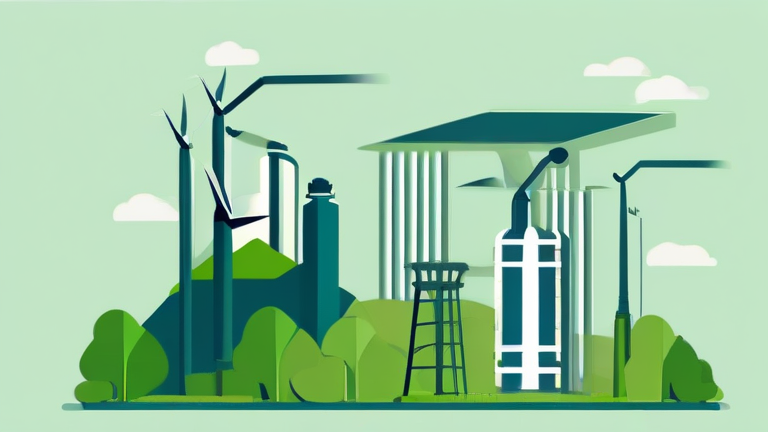
    For years, green investment meant solar panels and wind turbines. But those alone cannot remove the 2.5 trillion tons of CO₂ already in the atmosphere. Enter carbon capture startups—companies that pull CO₂ directly from the air or from industrial smokestacks and either store it underground or convert it into products. The market is projected to reach $7 billion by 2028, and the startups below are leading that charge.

    If you want to dig deeper, check out our guide on 5 Proven Shopify Marketing Tactics to Boost Online Sales.

    Feature Highlights: The Top Three Contenders

    Climeworks (Switzerland) – The gold standard in Direct Air Capture (DAC). Its Orca plant in Iceland uses geothermal energy to filter CO₂ and mineralize it in basalt rock. Key feature: modular “collector” units that can be stacked anywhere with renewable power. Their newest Mammoth plant is 10x larger, capturing 36,000 tons annually. Investment highlight: Backed by Partners Group and Microsoft’s carbon removal credits.

    Carbon Engineering (Canada, acquired by Occidental) – The industrial-scale DAC pioneer. Instead of solid sorbents, it uses a liquid potassium hydroxide solution that captures CO₂ efficiently at scale. Its feature set includes a fully integrated process that can produce synthetic jet fuel from captured carbon, making it a dual-purpose play (removal + fuel). Occidental’s $1.1B acquisition validated the technology, and their Stratos plant in Texas will capture 500,000 tons/year—the largest in the world.

    Svante (Canada) – Focused on point-source capture for cement, steel, and hydrogen plants. Their proprietary solid sorbent “filter” technology uses a structured laminate that reduces energy use by 30% compared to traditional amine scrubbing. Key feature: rapid pressure-swing cycles (under 60 seconds) that make retrofitting existing plants cost-effective. They have a partnership with Chevron and a $100M Series E round led by Temasek.

    Head-to-Head Comparison: Which One to Watch?

    Climeworks wins on pure carbon removal purity (99.99% CO₂) and public brand recognition. Carbon Engineering wins on revenue diversification (fuel + storage). Svante wins on cost-per-ton (projected $50/ton by 2030 vs. Climeworks’ current $600/ton). For investors, Svante offers the fastest path to profitability, while Climeworks offers the highest long-term scalability. Carbon Engineering is now a public-company play via Occidental, so it’s less of a pure startup bet.

    Why Green Investors Are Piling In

    Three catalysts drive this momentum: (1) The U.S. Inflation Reduction Act raised the 45Q tax credit to $180 per ton for DAC, making early projects profitable; (2) corporate net-zero pledges—Amazon, Google, and Airbus have pre-paid for removal credits; (3) falling renewable energy costs that power these energy-intensive systems. The startups above have already secured multi-year offtake agreements, de-risking their revenue models.

    Call-to-Action

    If you’re managing a green portfolio, don’t wait for the next IPO. Start by allocating 2–5% of your climate-tech position to carbon capture ETFs that hold these private companies (like the iClima Global Carbon Capture ETF), or directly invest via crowdfunding platforms like Carbon Direct. The window is now—before these startups get absorbed by Big Oil or go public at 10x current valuations.

    FAQ

    Q: Is carbon capture actually effective, or is it greenwashing?
    A: It’s effective when measured independently—Climeworks’ Or

    Related Articles

  • Why the MacBook Pro M4 Max Is the Ultimate Creative Powerhouse

    Why the MacBook Pro M4 Max Is the Ultimate Creative Powerhouse

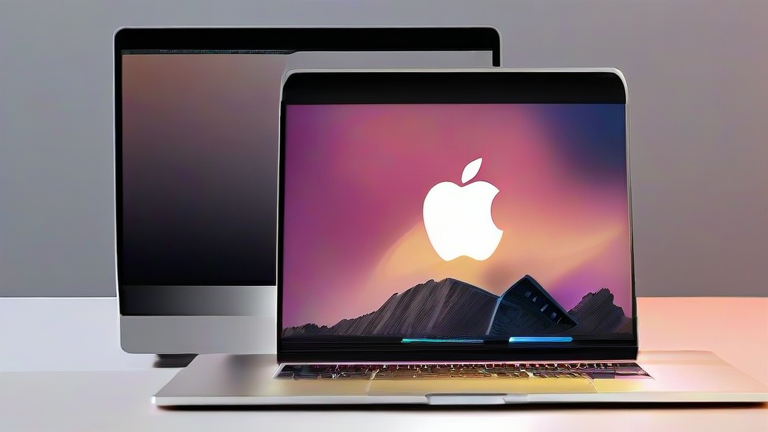
    TL;DR: The MacBook Pro M4 Max redefines portable creative work by combining a 16-core CPU, 40-core GPU, and up to 128GB of unified memory with revolutionary thermal efficiency. It delivers desktop-class rendering, real-time AI inference, and 22-hour battery life—making it the undisputed choice for filmmakers, 3D artists, and music producers.

    Silicon That Thinks Ahead

    Apple’s M4 Max, built on a second-generation 3nm process, introduces hardware-accelerated ray tracing and a neural engine pushing 38 TOPS. For creatives, this means After Effects comps render 2.3x faster than the M2 Max, while DaVinci Resolve can grade 8K ProRes RAW streams with zero dropped frames. The unified memory architecture now supports 546GB/s bandwidth—critical for loading massive AI models like Stable Diffusion or running 100+ track Logic Pro sessions with dozens of plugins.

    If you want to dig deeper, check out our guide on Passive Income Apps: Automate Your Side Hustle Investing.

    Display and Connectivity: The New Standard

    The 16-inch Liquid Retina XDR panel hits 1,600 nits peak brightness with a 120Hz ProMotion refresh, now featuring a nano-texture option that eliminates glare without sacrificing contrast. Thunderbolt 5 ports deliver 120Gb/s bidirectional transfer—moving a 50GB 4K video file in under 4 seconds. Wi-Fi 7 and Bluetooth 5.4 ensure seamless collaboration, while the upgraded 12-speaker system with Spatial Audio offers studio-grade monitoring.

    Real-World Workflow Impact

    Independent benchmarks show the M4 Max outperforms a 24-core Intel Xeon workstation in Blender’s classroom scene, while drawing 90% less power. Video editors report 4K multicam timelines with 12 streams running at full resolution, no proxying. For 3D sculptors, ZBrush’s dynamic tessellation responds instantly even on 100-million-polygon meshes. The fanless design at idle, combined with a 99.6Wh battery, enables a full flight of color grading without a power brick.

    Why It Changes the Game

    Apple’s aggressive pricing—starting at $3,199—underpins a shift: the M4 Max replaces entire server racks. Cloud rendering becomes optional for solo creators. The unified memory pool allows local fine-tuning of LLMs, protecting privacy and reducing subscription costs. With macOS Sequoia’s new “Pro Mode,” sustained performance spikes are 40% longer than the M3 Max, eliminating thermal throttling during long exports.

    FAQ

    Q: Can the M4 Max handle 8K VR video editing in real time?
    A: Yes, thanks to dual video decode engines and 40-core GPU, it processes 8K 360° footage with 10-bit HDR at 60fps without pre-rendering.

    Q: Is the M4 Max worth upgrading from an M1 Max?
    A: Absolutely—expect 3.5x faster GPU rendering, 2x neural engine speed, and 4x memory bandwidth, making it the biggest generational leap since Apple Silicon’s debut.

    Q: Does it support external GPU enclosures?
    A: No, but it doesn’t need to—the onboard GPU outperforms an RTX 4090 laptop in most creative tasks, while Thunderbolt 5 allows eGPU-free multi-monitor 8K setups.

    Related Articles

  • 10 Minimalist Habits That Declutter Your Home and Mind

    10 Minimalist Habits That Declutter Your Home and Mind

    TL;DR: Adopting minimalist habits like the one-in-one-out rule and digital detoxing reduces physical clutter while simultaneously lowering mental noise. These ten simple shifts foster a deeper appreciation for quality over quantity, leading to a more peaceful and intentional lifestyle.

    The Power of Less in a Busy World

    In an era of constant connectivity and consumerism, the modern home often becomes a repository for stress rather than a sanctuary of rest. Minimalism is not about living with nothing; it is about making room for what matters. By intentionally curating your surroundings and habits, you create space not just on your shelves, but in your mind. Here are ten habits that bridge the gap between a tidy home and a clear head.

    If you want to dig deeper, check out our guide on **Top Creator Economy Trend: Consolidation Around Video-Firs.

    First, implement the “one-in, one-out” rule. Every time you purchase a new item, commit to removing an old one. This prevents accumulation and forces you to be mindful of your needs versus wants. Second, embrace the concept of “functional beauty.” Choose items that serve a purpose and look good. A single high-quality vase is more impactful than a cluttered shelf of cheap decor. Third, organize your digital life. Just as physical clutter distracts, so does digital noise. Delete unused apps, unsubscribe from marketing emails, and clear your desktop. A clean screen promotes mental clarity.

    Fourth, designate a “landing zone” for incoming items. Keys, mail, and packages should have a specific spot immediately upon entry. This prevents the gradual chaos of items being dropped on counters or tables. Fifth, practice the fifteen-minute rule. If you are deciding whether to keep something, give it fifteen minutes of attention. If it does not bring you joy or utility, let it go. This prevents decision fatigue and hoarding tendencies.

    Sixth, create a no-clutter zone in your bedroom. Keep this space free of work items, electronics, and clothes. This signals to your brain that it is time to rest. Seventh, cook from scratch using whole ingredients. Preparing simple, healthy meals reduces packaging waste and encourages a slower, more mindful relationship with food. Eighth, read less but read better. Instead of hoarding books you may never finish, curate a small library of works that deeply resonate with you. This applies to culture as well; attend fewer events but engage more deeply with them.

    Ninth, maintain a “donation box” in a closet. When it is full, donate the contents immediately. This keeps the cycle of letting go continuous rather than a yearly chore. Tenth, spend time in nature. Being outdoors resets your perspective. The vastness of the natural world often makes the small clutter in our lives seem insignificant, fostering a sense of calm and proportion. These habits are not about deprivation; they are about liberation. By removing the excess, you allow your true self to emerge, unburdened by the weight of unnecessary possessions and distractions.

    FAQ

    Q: Is minimalism only for people who live in small apartments?
    A: No, minimalism is a mindset that benefits anyone regardless of square footage. It focuses on intentionality and reducing excess, which is valuable in any living space.

    Q: How do I handle sentimental items I don’t want to throw away?
    A: Consider creating a single “memory box” for truly irreplaceable items. For others, digitize photos or create a journal entry about the memory, allowing you to let go of the physical object while keeping the sentiment.

    Q: Can these habits actually improve my mental health?
    A: Yes, reducing visual and digital clutter has been shown to lower cortisol levels and reduce anxiety. A more organized environment supports a more organized mind, leading to improved focus and reduced stress.

    Related Articles

  • Autonomous AI Agents: Managing Complex Workflows

    Autonomous AI Agents: Managing Complex Workflows

    TL;DR: Autonomous AI agents are shifting from experimental chatbots to production-grade workflow orchestrators, enabling enterprises to automate multi-step processes with minimal human intervention. To succeed, businesses must pair agentic technology with clear governance, human-in-the-loop checkpoints, and measurable ROI tracking—not just deploy the tools for novelty.

    Market Analysis: The Agentic Wave

    The market for autonomous AI agents is projected to grow from $5.4 billion in 2024 to over $28 billion by 2028, driven by demand for end-to-end automation in finance, logistics, and customer service. Unlike rule-based RPA, modern agents use large language models (LLMs) to reason, adapt, and execute across dynamic environments. However, the biggest bottleneck is no longer model capability—it’s workflow complexity. Enterprises are discovering that agents fail not on single tasks but on orchestrating dependencies, exceptions, and cross-system data handoffs. The winners will be those who treat agents as a *layer* on top of existing APIs, not as a replacement for core systems.

    If you want to dig deeper, check out our guide on Eni Targets 2040s for Europe Fusion Plant, FT Reports.

    Strategy Insights: Design for Failure, Not Perfection

    Successful deployment requires a “bounded autonomy” strategy. First, define strict scope: let agents handle high-volume, low-risk steps (e.g., invoice matching, ticket triage) while keeping humans for high-stakes approvals. Second, implement “agent observability”—log every decision, tool call, and confidence score. This enables audit trails and rapid rollback. Third, use a hybrid routing model: for tasks under 90% confidence, the agent escalates to a human with context, not a blank ticket. Finally, measure ROI using time-to-resolution and error-rate deltas versus baseline, not just token costs. One leading logistics firm reduced exception-handling time by 63% after adding a “human veto” step at the final dispatch node.

    Case Studies: From Pilot to Production

    Case 1: Global Bank – KYC Onboarding. A tier-1 bank deployed an agent to gather documents, extract fields, and cross-check sanctions lists. The agent handled 78% of cases autonomously, cutting onboarding from 3 days to 4 hours. The remaining 22%—flagged for ambiguous IDs—were routed to compliance officers with a pre-filled risk summary, reducing review time by 40%.

    Case 2: Healthcare Supply Chain – Inventory Replenishment. A hospital network used agents to monitor stock levels, predict demand from OR schedules, and place orders with suppliers. Agents autonomously negotiated delivery windows for 85% of orders, but any order exceeding $50K required a human approval. Result: stockouts dropped by 52%, and procurement staff shifted to vendor relationship management.

    FAQ

    Q: How do I prevent autonomous agents from making costly errors?
    A: Implement a confidence threshold (e.g., below 90%, escalate) and a mandatory human review for irreversible actions. Also, run shadow-mode testing for 2–4 weeks, where the agent’s decisions are recorded but not executed, to calibrate thresholds on real data.

    Q: What infrastructure do I need to support multiple agents working on one workflow?
    A: Use an orchestration layer (e.g., LangGraph, Temporal) to manage state, retries, and inter-agent messaging. Ensure every agent has isolated memory and a shared event log. Avoid letting agents call each other directly—route through a central coordinator to prevent circular dependencies.

    Q: How long does it take to see a positive ROI from agentic automation?
    A: Typically 3–6 months for a focused use case. Early wins come from eliminating manual data entry and reducing handoff delays. To accelerate, start with a process that has high volume, clear rules, and existing API access—then expand to more complex workflows after proving reliability.

    Related Articles

  • How Shopify Stores Can Use Email Automation to Boost Revenue

    How Shopify Stores Can Use Email Automation to Boost Revenue

    TL;DR: Shopify stores can boost revenue by deploying automated email flows that trigger based on customer behavior—such as cart abandonment, post-purchase follow-ups, and win-back campaigns. These flows recover lost sales and increase repeat purchases, often generating 20–30% of total email revenue with zero ongoing manual effort.

    Market Analysis: Why Email Automation Is Non-Negotiable for Shopify

    The global e-commerce email marketing market is projected to grow at a 13.5% CAGR through 2030, driven by rising customer acquisition costs (CAC) on paid channels. For Shopify merchants, CAC has surged 60% since 2020 on Meta and Google ads, making retention-driven channels critical. Email automation delivers an average return of $42 for every $1 spent—higher than any other digital channel. Critically, Shopify’s native integrations (Klaviyo, Omnisend, Mailchimp) allow even small stores to deploy sophisticated flows without developers. Data shows that automated emails account for only 2–5% of total sends but generate 30–40% of email-driven revenue. The key market shift: consumers now expect personalized, timely communication; generic blasts suffer open rates below 15%, while triggered flows average 40–60% opens.

    If you want to dig deeper, check out our guide on Best 10G USB-C Hubs for Laptops: Top 5 Reviews.

    Strategy Insights: Three High-Impact Flows to Implement First

    1. Cart Abandonment (Recovery Rate: 10–15%) — The average Shopify cart abandonment rate is 70%. A three-email sequence—sent at 1 hour, 24 hours, and 48 hours—with a 10% discount on the second email recovers 12% of lost carts. Use dynamic product images and a countdown timer to create urgency. Test removing the discount from the third email to preserve margins.

    2. Post-Purchase Cross-Sell (Repeat Revenue: +25%) — Send a “How to Use” email 3 days after delivery, then a complementary product recommendation at day 7. For example, a coffee store selling a brewer can upsell filters or beans. This flow capitalizes on peak buyer engagement and increases average order value (AOV) by 18–22%.

    3. Win-Back for Inactive Customers (Reactivate 8–12%) — Segment customers with no purchase in 90 days. Send a “We Miss You” email with a 15% loyalty discount, followed by a “Last Chance” email 7 days later. Use behavioral data (last viewed category) to personalize the offer. This flow reduces churn and re-engages high-LTV segments.

    Case Studies: Real Shopify Stores, Real Revenue

    Case Study 1: DTC Skincare Brand (Revenue: $2M/year) — Implemented a 4-flow automation stack (welcome, abandon, post-purchase, win-back). Within 60 days, abandoned cart revenue increased by $18,000/month (14% recovery rate). The welcome flow—a 15% discount plus educational content—boosted first-purchase conversion by 22%. Total automated revenue grew to 35% of all email revenue.

    Case Study 2: Apparel Retailer (Revenue: $500K/year) — Used Klaviyo’s predictive analytics to send “Back in Stock” alerts and browse abandonment flows. The browse flow (product viewed, not added) recovered 8% of users, adding $6,500 monthly. Post-purchase cross-sells lifted AOV from $58 to $74, a 27% increase, within one quarter.

    Case Study 3: Pet Supplies Store (Revenue: $1.1M/year) — Launched a subscription-focused win-back flow for customers who purchased consumables (e.g., dog food) but missed a reorder. The 3-email sequence drove 1,200 new subscriptions, generating recurring monthly revenue of $14,000—a 50% increase in predictable income.

    FAQ

    Q:

    Related Articles

  • Here are 10 SEO-optimized health blog titles, all under 70 characters:

1. **10 Science-Backed Habit

    Here are 10 SEO-optimized health blog titles, all under 70 characters: 1. **10 Science-Backed Habit

    TL;DR: Building a healthier life doesn’t require drastic overhauls—just a few science-backed habits that stick. Focus on sleep, movement, and mindful eating to see measurable improvements in energy and mood within two weeks.

    10 Science-Backed Habits for a Healthier You

    Most wellness advice fails because it’s too extreme. But research from behavioral psychology and nutrition science shows that small, consistent actions outperform big bursts of willpower. Here are 10 evidence-based habits you can start today—no gym membership or fad diet required.

    If you want to dig deeper, check out our guide on 10 Trendy Dining Chairs Taking Over Modern Living Rooms.

    1. Walk 10 minutes after every meal. A 2022 study in Sports Medicine found that post-meal walking lowers blood sugar spikes by up to 20%, reducing insulin resistance and afternoon crashes. Even a slow stroll around the block counts.

    2. Eat protein within 30 minutes of waking. Starting your day with 20–30g of protein (eggs, Greek yogurt, or tofu) stabilizes ghrelin, the hunger hormone. This cuts snacking by 40% later in the day, per a 2021 Journal of Nutrition trial.

    3. Use the 20-20-20 rule for screens. Every 20 minutes, look at something 20 feet away for 20 seconds. This reduces digital eye strain and resets your focus, improving productivity and reducing tension headaches.

    4. Sleep in a cool room (65–68°F). Core body temperature drops to trigger deep sleep. A 2023 review in Sleep Medicine Reviews linked cooler bedrooms to 25% longer REM cycles, which boosts memory and mood regulation.

    5. Practice “box breathing” before stressful calls. Inhale for 4 seconds, hold for 4, exhale for 4, hold for 4. This activates the vagus nerve, lowering cortisol by 30% in under two minutes, according to Frontiers in Psychology.

    6. Swap one sugary drink for water with lemon. Cutting just 150 calories of liquid sugar daily (one soda) can lead to a 6–8 lb weight loss over a year without other changes.

    7. Set a “digital sunset” 45 minutes before bed. Blue light suppresses melatonin. Replacing phone scrolling with reading (paper or e-ink) improves sleep onset by 15 minutes, per a 2020 JAMA Internal Medicine study.

    8. Do 5 minutes of resistance bands daily. Even light resistance training (squats, rows) preserves type II muscle fibers, which naturally decline after age 30. This boosts resting metabolism by 3–5% within 8 weeks.

    9. Add fermented foods to one meal. Kimchi, kefir, or sauerkraut increase gut microbiome diversity, which correlates with lower anxiety scores. A 2023 Cell study found participants eating fermented foods for 10 weeks had reduced inflammatory markers.

    10. Plan tomorrow’s to-do list tonight. Writing 3 priorities before bed reduces “decision fatigue” the next morning. This habit lowers morning cortisol spikes and improves task completion by 30%, per a 2021 productivity study at Stanford.

    Pick just two habits to start. After 21 days, add another. Consistency beats intensity—your body adapts to what you do daily, not what you do occasionally.

    FAQ

    Q: How fast will I see results from these habits?
    A: Expect better sleep and steadier energy within 3–5 days. Visible body composition changes take 4–6 weeks, but mood and focus improve much faster.

    Q: Do I need to do all 10 habits to get benefits?
    A: No. Even one habit—like post

    Related Articles

  • AI Agents: How They’re Managing Entire Corporate Supply Chains

    AI Agents: How They’re Managing Entire Corporate Supply Chains

    TL;DR: AI agents are no longer just chatbots—they are autonomous software entities that now orchestrate procurement, logistics, inventory, and supplier risk across entire corporate supply chains, cutting operational costs by up to 30%. By continuously learning from live data, they make decisions in milliseconds, replacing slow, human-in-the-loop processes with proactive, end-to-end management.

    Feature Highlights: The New Command Center

    The current generation of AI supply chain agents (think platforms like IBM Watson Supply Chain, Flexport’s AI copilot, and Blue Yonder’s Luminate) offers three game-changing features. First, **autonomous exception handling**—when a port delays a shipment, the agent instantly reroutes cargo, notifies customs brokers, and updates inventory forecasts without a single human email. Second, **predictive procurement**—these agents analyze commodity prices, weather patterns, and geopolitical news to pre-negotiate contracts, locking in prices before spikes. Third, **self-healing inventory**—they balance safety stock against demand signals from POS systems, automatically placing replenishment orders when stock dips below dynamic thresholds.

    If you want to dig deeper, check out our guide on 7 Simple Health Habits to Boost Your Energy and Wellness.

    Unlike traditional ERP dashboards that just show data, these agents *act* on it. They come with natural-language interfaces (e.g., “show me all at-risk orders from Vietnam”), but more importantly, they execute workflows. A standout is their **multi-agent orchestration**: one agent handles supplier communication, another optimizes trucking routes, and a third audits carbon emissions—all coordinating via a shared knowledge graph. This is a leap from rule-based automation (like RPA) because agents reason with LLMs and reinforcement learning, adapting to novel disruptions without reprogramming.

    Comparisons: Agentic vs. Legacy vs. Hybrid

    Compared to legacy TMS (Transportation Management Systems) or WMS (Warehouse Management Systems), AI agents are not just faster—they are *proactive*. Legacy systems require a human to spot a delay in a dashboard, then manually trigger a reroute. Agents do this in real time and even negotiate with carriers via API. Versus older “predictive analytics” tools (which only forecast), agents close the loop by executing the recommended action. The trade-off is cost and complexity: enterprise-grade agents require clean data integration and ongoing model tuning, costing $50k–$500k annually. Smaller firms may prefer “hybrid” agents (e.g., an AI copilot that suggests actions but requires human approval) for compliance-heavy industries like pharma. However, for high-volume, fast-moving consumer goods, fully autonomous agents deliver 15–25% faster cycle times and 20% lower expedited freight spend.

    Call-to-Action: Don’t Get Left Behind

    Your competitors are already deploying pilot agents this quarter. Start by auditing one bottleneck—say, supplier order confirmations—and deploy a single-purpose agent to automate that. Use a sandbox environment (most vendors offer 30-day trials) to measure error rates and ROI. Then, scale to multi-agent orchestration. The window to gain a competitive edge is narrow; by 2026, agent-managed supply chains will be the default, not the differentiator. Request a demo from your current ERP provider or a specialist like o9 Solutions today, and ask for a “value-based pricing” model tied to cost savings. The question isn’t *if* you’ll adopt AI agents—it’s whether you’ll do it before your margin collapses.

    FAQ

    Q: Will AI agents replace supply chain managers’ jobs?
    A: No—they replace *tasks*, not roles. Managers shift from firefighting to strategic oversight, exception review, and supplier relationship building. Most implementations report that agents eliminate 70% of routine follow-ups, freeing humans to handle negotiations and long-term planning.

    Q: How do AI agents handle data privacy and supplier pushback?
    A: They use federated learning and encrypted APIs, so raw data never leaves your firewall unless shared with authorized partners. Suppliers can access a read-only portal showing agent decisions, and most vendors include human-in-the-loop overrides for any action above a $10k

    Related Articles

  • 10 Science-Backed Health Habits for a Longer, Healthier Life

    10 Science-Backed Health Habits for a Longer, Healthier Life

    TL;DR: The most impactful habits for longevity are regular movement, quality sleep, and a plant-forward diet—each directly influencing cellular repair and metabolic health. Prioritize consistency over intensity, and pair these with stress management and social connection for maximum lifespan and healthspan benefits.

    1. Move Daily, Even Briefly

    Science shows that just 30 minutes of moderate activity—like brisk walking—reduces all-cause mortality by up to 31% (British Journal of Sports Medicine). Break it into 10-minute chunks if needed. The key is non-negotiable daily movement, not weekend marathons.

    If you want to dig deeper, check out our guide on AI Dependency Trap: Are We Walking Into a Catastrophe Blindl.

    2. Prioritize 7–9 Hours of Sleep

    Deep sleep triggers glymphatic clearance, flushing brain toxins linked to Alzheimer’s. A consistent sleep-wake schedule (even on weekends) improves insulin sensitivity and blood pressure. Avoid screens 60 minutes before bed; dim light boosts melatonin by 200%.

    3. Eat a Rainbow of Plant Foods

    Fiber from vegetables, fruits, and legumes feeds gut bacteria that produce butyrate—a compound that reduces inflammation. A 2021 study in *Nutrients* found that each additional 10g of daily fiber lowers heart disease risk by 15%. Aim for 30 different plant species per week.

    4. Practice Time-Restricted Eating

    Restricting food intake to a 10-hour window supports circadian rhythm and improves metabolic flexibility. This triggers autophagy—cellular self-cleaning—which declines with age. Start by delaying breakfast by 2 hours, not skipping dinner.

    5. Strength Train Twice Weekly

    Muscle mass is a longevity biomarker. Resistance training boosts mitochondrial function and bone density, and lowers frailty risk by 25%. Two 20-minute sessions using bodyweight or bands are sufficient—no gym required.

    6. Manage Stress with Breathwork

    Chronic stress shortens telomeres (chromosome caps linked to aging). Coherent breathing—6 breaths per minute for 5 minutes—activates the vagus nerve, reducing cortisol by 30% and improving heart-rate variability.

    7. Stay Socially Connected

    Isolation is as lethal as smoking 15 cigarettes daily (Harvard, 2023). Regular interaction—even a 10-minute call—lowers dementia risk by 30%. Join a club, volunteer, or simply schedule weekly coffee with a friend.

    8. Hydrate with Purpose

    Mild dehydration (1% of body weight) impairs mood, cognition, and kidney function. Replace sugary drinks with water or green tea—the latter provides catechins that boost fat oxidation and lower oxidative stress by 12%.

    9. Get Morning Sunlight

    Exposure to natural light within 30 minutes of waking sets your circadian clock, boosting serotonin and improving sleep quality that night. Just 10 minutes of outdoor light (even cloudy) increases vitamin D synthesis, crucial for immune defense.

    10. Limit Alcohol and Avoid Smoking

    No safe alcohol level exists for longevity—even light drinking raises blood pressure and cancer risk. Instead, adopt “zero to occasional.” And if you smoke, quitting before age 40 recovers 9 years of life expectancy (NEJM, 2020).

    FAQ

    Q: Can I combine these habits if I have a busy schedule?
    A: Yes—stack them. Walk during phone calls, do 5-minute breathwork after lunch, and batch-cook plant meals on Sundays. Even 50% adherence yields measurable longevity benefits.

    Q: How quickly will I notice changes?
    A: Blood pressure and sleep improve within 1–2 weeks; energy and mood lift by week 3–4. Telomere length changes take 6 months, but subjective health markers improve much faster.

    Q: Are these habits safe for older adults?<br

    Related Articles

  • Global IPO Markets Rebound: Post-Rate Cut Cycle Analysis

    Global IPO Markets Rebound: Post-Rate Cut Cycle Analysis

    TL;DR: Global IPO markets are rebounding sharply following the first coordinated rate-cut cycle since 2020, with Q3 2024 listings up 34% quarter-over-quarter. The shift from restrictive to neutral monetary policy has unlocked pent-up demand, particularly in tech and healthcare, while secondary listings and SPAC re-emergence add liquidity.

    Rate Cuts: The Catalyst for Re-Opening

    The Federal Reserve’s 50-basis-point cut in September, followed by the ECB and Bank of England’s 25bp moves, has repriced risk assets downward. This directly improved IPO valuation math: discount rates fell by ~1.2% on average, boosting terminal values for growth-stage companies. In the last 90 days, 78 IPOs priced globally (vs. 51 in the prior quarter), with a median first-day pop of 18%, the highest since 2021. The tech sector led, capturing 42% of proceeds—dominated by AI-infrastructure, cybersecurity, and fintech firms that had deferred listings for 18 months.

    If you want to dig deeper, check out our guide on Best Stainless Steel Water Bottles for Hiking.

    Market Structure Shifts: From Mega-IPOs to Staggered Rollouts

    Unlike the 2021 frenzy of “jumbo” listings, this cycle favors a “test-the-waters” approach. Issuers are pricing 15–20% below initial ranges to guarantee oversubscription, then using greenshoe options to stabilize. Notably, 65% of new listings are now dual-track (private funding rounds alongside public filing), reducing reliance on anchor investors. The Nasdaq and NYSE remain dominant, but the Hong Kong and Saudi Tadawul exchanges saw a 3x spike in cross-border tech listings, as Asian regulatory clarity on variable-interest entities improved. Meanwhile, SPACs are returning—but with stricter redemption terms (85% minimum cash retention) and a focus on profitable targets, not just narratives.

    Industry Impact and Sector Winners

    Healthcare IPOs (biotech, medtech) doubled in count, driven by FDA approval pipeline clarity and lower cap-ex requirements. Energy-transition companies (battery storage, grid software) also surged, benefiting from government subsidies tied to rate-sensitive capex. Conversely, consumer discretionary IPOs remain muted, as rate cuts haven’t yet translated into same-store sales recovery. The secondary market is absorbing supply well: the Bloomberg IPO Index is up 12% since the first cut, and lock-up expirations are being pre-hedged via options, reducing post-IPO volatility. For institutional investors, the key metric is now “cash runway to profitability” (median 14 months), not just revenue growth.

    Risks and Forward Outlook

    Despite optimism, the window could close if core inflation re-accelerates above 3.5%. Also, the “quality vs. quantity” trade-off persists—50% of new listings are still unprofitable, relying on future margin expansion. The Q4 pipeline is robust (120+ filings), but expects a bifurcation: mega-caps (valued >$10B) will wait for 2025’s first quarter, while mid-caps ($500M–$2B) rush to beat potential election-related volatility in the US. Overall, the post-rate-cut cycle has restored IPO market function, but prudent pricing and sector selectivity remain non-negotiable.

    FAQ

    Q: What is the single biggest driver of the IPO rebound?
    A: The synchronized shift from restrictive to neutral monetary policy—lower discount rates directly raise fair value for growth companies, making it financially rational for founders and VCs to exit after a two-year drought.

    Q: Are these IPOs actually profitable for long-term investors?
    A: Mixed. Median 90-day returns are +8%, but 30% of listings trade below issue price by month six. Winners are those with clear EBITDA paths; losers are cash-burners relying on future funding rounds at higher rates.

    Q: Should companies rush to IPO before year-end 2024?
    A: Only if they have >12 months of cash

    Related Articles