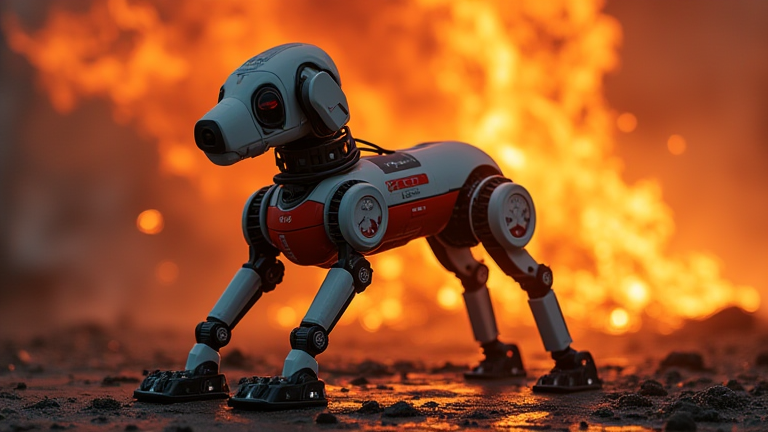
TL;DR: Chinese robot dogs are rapidly transforming emergency response by navigating hazardous environments to protect human rescuers from fire and toxic leaks. This technological shift not only saves lives but also opens a lucrative new market for industrial safety automation.
Market Analysis and Strategic Shifts
The global market for service robots is experiencing exponential growth, driven largely by the urgent need for safer industrial operations. In China, the surge in demand for quadrupedal robots stems from their unique ability to traverse complex terrains that wheeled vehicles cannot handle. Industry analysts predict that the sector will expand significantly over the next decade, with emergency response applications leading the charge. Companies are strategically positioning themselves to capture this niche by integrating advanced sensors and AI-driven decision-making capabilities into their hardware. This strategic pivot allows firms to diversify revenue streams beyond consumer entertainment and logistics, tapping into high-margin government and industrial contracts. The competitive landscape is intensifying as startups and established tech giants alike race to demonstrate superior durability and operational efficiency. Investors are particularly interested in firms that can prove their robots’ reliability in real-world disaster scenarios, as this builds trust and facilitates broader adoption. Furthermore, the integration of 5G connectivity enhances real-time data transmission, allowing operators to control robots remotely with minimal latency. This technological synergy is crucial for applications requiring split-second decisions in unstable environments. As regulations regarding workplace safety become stricter globally, the adoption of robotic assistants is no longer optional but a compliance necessity for many industries.
Case Studies in Action
Recent incidents in industrial zones have highlighted the efficacy of these robotic units. In one notable case, a chemical plant explosion triggered a massive gas leak. Human firefighters were unable to enter due to the risk of secondary explosions and toxic fumes. Deployed robot dogs entered the facility, mapping the interior using LiDAR and thermal cameras while detecting gas concentrations. They identified the source of the leak and guided human teams to safely isolate the hazard. Another example involves a multi-story warehouse fire where smoke density was lethal. The robots navigated through collapsed debris, locating trapped survivors and relaying their positions to command centers. These cases demonstrate that robot dogs are not just novelties but critical tools that enhance situational awareness and reduce casualty rates. Their success has led to increased procurement by municipal emergency services and large industrial corporations seeking to mitigate operational risks.
FAQ
Q: How do robot dogs detect toxic leaks?
A: They are equipped with specialized gas sensors and chemical detectors that identify hazardous substances in real-time.
If you want to dig deeper, check out our guide on 1,000 AI Agents Spontaneously Agreed: The AI Safety Warning.
Q: Can these robots operate in extreme heat?
A: Yes, many models are designed with heat-resistant materials and cooling systems to withstand high-temperature environments.
Q: Who are the primary buyers of these robots?
A: Primary buyers include government emergency services, industrial plants, and large-scale construction companies focused on safety.
Leave a Reply