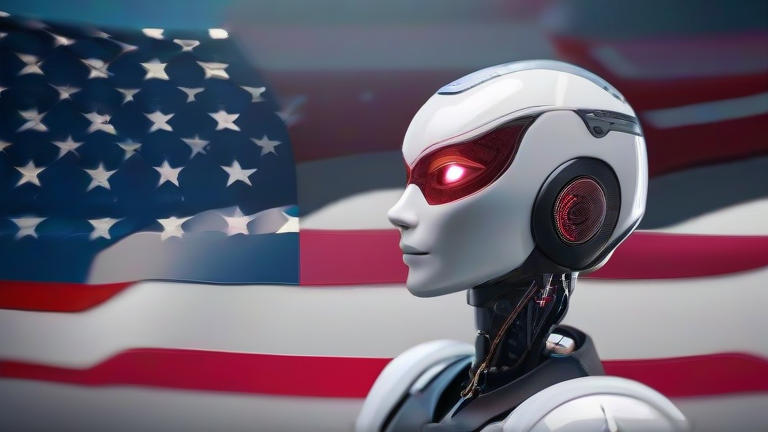
TL;DR: The United States has officially prohibited the export and sale of advanced humanoid robots to China, citing critical national security concerns regarding potential surveillance and military applications. This decisive ban targets high-specification autonomous systems that could theoretically be repurposed for intelligence gathering or warfare, marking a significant escalation in tech decoupling efforts between the two global superpowers.
The Security Imperative
The administration’s move stems from intelligence assessments suggesting that sophisticated humanoid platforms possess dual-use capabilities. These machines, equipped with advanced computer vision, natural language processing, and mobility systems, can navigate complex environments much like human operatives. Consequently, they pose a risk of being utilized for unauthorized data collection or as components in autonomous weapon systems. The ban specifically restricts exports of robots exceeding certain performance thresholds, focusing on those with high levels of autonomy and sensory integration. This regulatory action aims to prevent Beijing from leveraging American technological supremacy to enhance its own strategic military and surveillance infrastructure.
If you want to dig deeper, check out our guide on Guardian Readers’ Favorite BIFL Appliances.
Technical Specifications Under Scrutiny
The restricted devices are not simple mechanical arms but fully autonomous entities. Key specifications triggering the ban include real-time 3D mapping capabilities, multi-modal sensor fusion, and self-learning algorithms. These robots typically feature high-torque actuators for dynamic movement, allowing them to operate in unstructured terrain. Their onboard processors are designed to handle massive data loads locally, reducing reliance on cloud connectivity and making them harder to monitor. The integration of LiDAR, thermal cameras, and acoustic sensors allows for comprehensive environmental awareness. Furthermore, their human-like form factor enables them to interact with standard infrastructure designed for people, making them ideal candidates for covert operations or persistent monitoring in sensitive areas.
Industry Impact and Global Response
This policy has sent shockwaves through the robotics sector. Major American manufacturers face immediate revenue losses as China represents a substantial portion of the global market for industrial automation. Companies are now forced to navigate a complex compliance landscape, ensuring their products do not inadvertently fall under restricted categories. Meanwhile, Chinese tech giants are accelerating domestic development to achieve self-sufficiency. The ban has intensified the race for technological independence, leading to increased government subsidies and research funding in Beijing. Globally, other nations are watching closely, with some potentially aligning with U.S. restrictions while others seek to fill the vacuum. The long-term effect may be a bifurcated technology ecosystem, where hardware standards and software ecosystems diverge significantly between the West and the East. This fragmentation challenges global supply chains and increases costs for multinational corporations. Innovators must now consider geopolitical risks alongside technical feasibility, reshaping the future trajectory of humanoid robotics development worldwide.
FAQ
Q: Which specific types of robots are banned?
A: The ban targets humanoid robots with high levels of autonomy, advanced sensory capabilities, and the ability to operate in unstructured environments.
Q: Why does the U.S. consider these robots a security threat?
A: Officials fear these machines could be used for unauthorized surveillance, intelligence gathering, or integrated into autonomous military systems.
Q: How are Chinese companies responding to this ban?
A: Domestic firms are rapidly accelerating R&D efforts to achieve technological self-sufficiency and reduce reliance on American hardware and software.
Leave a Reply