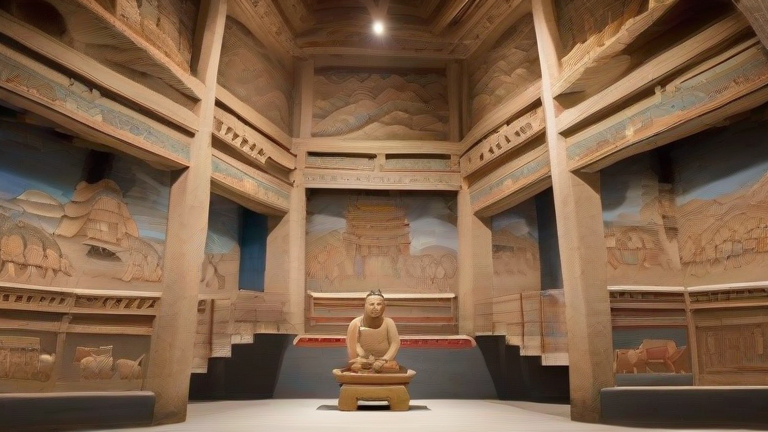
TL;DR: The Mogao Caves in Gansu province remain the world’s richest repository of ancient Buddhist murals, housing over 45,000 square meters of artwork across 735 caves. Recent high-resolution digital preservation initiatives have revolutionized how these fragile artifacts are studied, shared, and protected from environmental degradation.
Digital Renaissance of Dunhuang
The Mogao Caves, often referred to as the “Caves of the Thousand Buddhas,” stand as a testament to over a millennium of continuous artistic and religious activity. Located at the western end of the Hexi Corridor, this UNESCO World Heritage site contains murals that depict not only religious narratives but also daily life, architecture, and fashion from the Northern Liang through the Qing dynasty. The sheer volume and variety of these artworks make it the largest known collection of Buddhist art in the world, serving as a visual encyclopedia of ancient Silk Road culture.
If you want to dig deeper, check out our guide on How Solid-State Batteries Slash EV Charging Times.
Latest Technological Developments
In recent years, the Dunhuang Academy has spearheaded a groundbreaking digital preservation project known as “Digital Dunhuang.” This initiative utilizes advanced photogrammetry and 3D laser scanning technology to create ultra-high-resolution digital twins of the caves. These digital assets capture microscopic details that are invisible to the naked eye, allowing researchers to analyze brushstrokes, pigment composition, and structural integrity with unprecedented precision. The technology employs multi-spectral imaging to reveal underlying sketches and earlier layers of paint that have faded or been obscured over centuries, offering new insights into the artists’ techniques and historical changes.
The industry impact of this technological leap is profound. By making these digital archives publicly accessible, the project has democratized access to cultural heritage, allowing scholars and enthusiasts worldwide to study the caves without the need for physical travel. This significantly reduces the environmental stress on the fragile site caused by tourism, such as carbon dioxide emissions and humidity changes from human breath. Furthermore, the data generated has spurred advancements in computer vision and artificial intelligence, particularly in pattern recognition and automated degradation detection, which are now being applied to other heritage sites globally.
Preservation and Future Outlook
The integration of virtual reality (VR) and augmented reality (AR) technologies offers immersive experiences that complement physical visits. Visitors can now explore reconstructed caves that show the murals in their original vibrant colors, providing a glimpse into their past glory before centuries of oxidation and damage. This approach not only enhances educational value but also ensures the long-term sustainability of the site. As climate change poses new threats to the region, these digital backups serve as a crucial insurance policy for humanity’s shared cultural heritage, ensuring that the wisdom and artistry of the Mogao Caves will endure for future generations.
FAQ
Q: How many caves are there in the Mogao Caves complex?
A: There are 735 existing caves containing over 45,000 square meters of murals and nearly 2,000 painted sculptures.
Q: What is the primary benefit of the Digital Dunhuang project?
A: It allows for remote study and global access while minimizing physical tourism, which helps preserve the fragile murals from environmental damage.
Q: Which technologies are used to create digital twins of the caves?
A: The project uses high-resolution photogrammetry, 3D laser scanning, and multi-spectral imaging to capture detailed structural and artistic data.
Leave a Reply