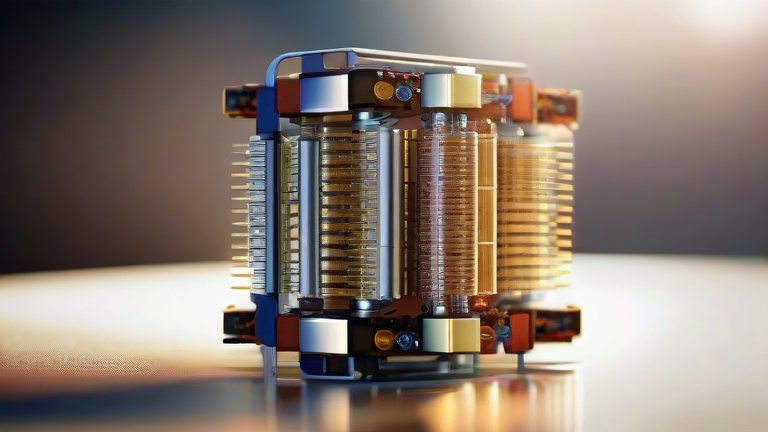
TL;DR: Quantum computing has achieved commercial scalability by integrating error-corrected logical qubits into modular, cloud-accessible architectures. This breakthrough allows enterprises to run complex simulations and optimizations reliably, marking the transition from experimental research to viable industrial utility.
Preparing Your Infrastructure

Before leveraging this new milestone, organizations must assess their current computational bottlenecks. Quantum advantage is not universal; it specifically benefits problems involving combinatorial optimization, molecular modeling, and cryptographic analysis. Begin by identifying high-value use cases where classical supercomputers struggle with exponential time complexity. Ensure your team includes quantum algorithm specialists who understand the unique constraints of noisy intermediate-scale quantum (NISQ) devices and the emerging fault-tolerant systems.
Accessing the Quantum Cloud
The first practical step is registering for a provider’s enterprise cloud tier. Major tech giants and specialized quantum firms now offer direct API access to scalable quantum processors. These platforms provide hybrid solvers that combine classical and quantum resources seamlessly. You do not need to build a dilution refrigerator in your basement; instead, focus on software integration. Install the necessary SDKs for Python or C++ to interface with the quantum backend. Configure your authentication tokens securely, ensuring that proprietary data remains encrypted during transmission and processing.
Developing and Testing Algorithms

Start by translating your classical logic into quantum circuits using high-level frameworks like Qiskit or Cirq. Focus on variational algorithms such as the Variational Quantum Eigensolver (VQE) or Quantum Approximate Optimization Algorithm (QAOA). These algorithms are designed to run efficiently on current scalable hardware with limited coherence times. Run simulations locally first to validate logic before submitting jobs to the actual quantum hardware. Monitor error rates and fidelity metrics closely. The new commercial milestone means these errors are significantly lower than in previous generations, but calibration is still required.
Optimizing for Production
Once your prototype performs well, optimize the circuit depth to minimize execution time. Shallow circuits reduce exposure to decoherence, the primary source of error in quantum systems. Utilize the provider’s error mitigation tools to post-process results and enhance accuracy. Iterate rapidly by adjusting parameters based on feedback loops. Document every run meticulously, as reproducibility is key to scientific and commercial validity. Finally, scale your workload by distributing tasks across multiple quantum cores available in the modular architecture.
FAQ
Q: Is quantum computing ready for everyday consumer tasks?
A: No, it is currently optimized for specialized enterprise problems like logistics and drug discovery, not general browsing or office work.
If you want to dig deeper, check out our guide on Optimize Sleep with Wearable Tech: Tips & Benefits.
Q: Do I need to understand physics to use these services?
A: While helpful, high-level SDKs abstract complex physics, allowing software engineers to focus on algorithmic logic and application integration.
Q: How much does it cost to access scalable quantum computers?
A: Pricing varies by provider but typically involves a pay-per-shot model or enterprise subscription, making it accessible for R&D budgets.
Leave a Reply