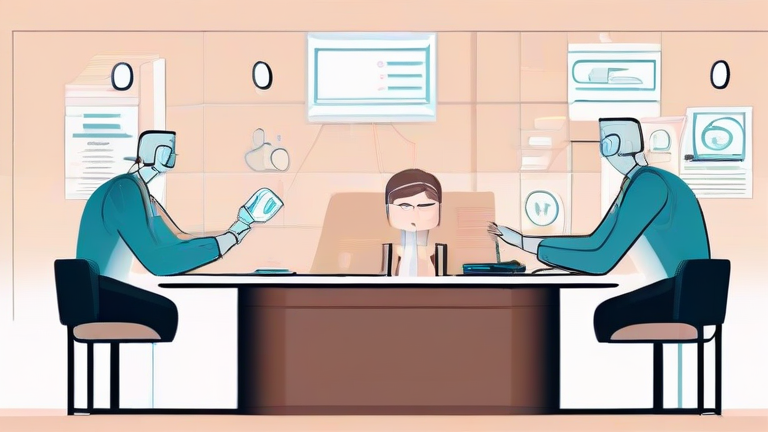
AI Agents Replacing Routine Customer Service Roles
The landscape of customer service is undergoing a seismic shift, driven by the rapid advancement of artificial intelligence. For decades, the call center model has relied on human agents to handle repetitive, high-volume inquiries. Today, that model is being dismantled and rebuilt by autonomous AI agents capable of resolving complex issues without human intervention. This transition is not merely a technological upgrade; it is a fundamental restructuring of how businesses interact with their customers, offering unprecedented efficiency while challenging traditional management strategies.

Market analysis reveals a staggering trajectory for this sector. According to recent industry reports, the global AI customer service market is projected to grow at a compound annual growth rate (CAGR) of over 25% through 2030. This explosion is fueled by the decreasing cost of large language models and the increasing consumer expectation for instant, 24/7 support. Companies are no longer viewing AI as a supplementary tool but as the primary interface for routine interactions. The data suggests that businesses adopting AI-driven support see a 30% reduction in operational costs within the first year, primarily by deflecting tier-one tickets that previously required human attention. This financial incentive is accelerating adoption rates across retail, finance, and healthcare sectors, where volume is high and repetition is common.
If you want to dig deeper, check out our guide on Global Scaling of Sustainable Aviation Fuel: Trends & Future.
However, the strategy behind this replacement must be nuanced. Simply deploying chatbots is insufficient for sustainable success. Successful organizations are adopting a “human-in-the-loop” hybrid model. In this strategy, AI agents handle the bulk of routine queries—such as password resets, order tracking, and basic product information—freeing human agents to tackle complex, emotionally charged, or high-value issues. This shift requires a redefinition of job roles. Rather than being replaced entirely, human agents are upskilled to become “AI supervisors” or specialized problem solvers. Training programs must now focus on empathy, complex critical thinking, and AI oversight rather than script memorization. Leaders must also invest in seamless handoff protocols, ensuring that when an AI agent detects frustration or complexity, the transfer to a human is smooth and context-aware, preserving the customer experience.
Related Articles
Leave a Reply