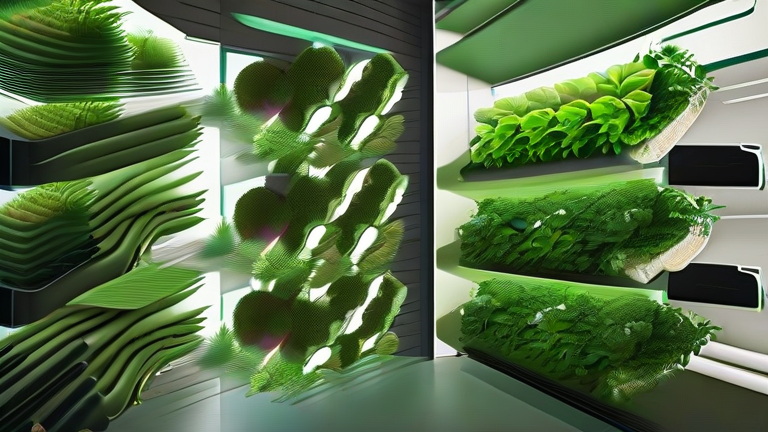
How Vertical Farming Reduces Urban Food Supply Chains
As urban populations swell, the traditional model of agricultural logistics faces an unprecedented crisis. The conventional food supply chain is fraught with inefficiencies, environmental costs, and nutritional degradation. Enter vertical farming—a revolutionary agricultural technique that stacks crops in vertically stacked layers, often incorporating controlled-environment technology. This innovation is not merely a trend; it is a critical component in reshaping urban food security and sustainability. By bringing production closer to consumption, vertical farming drastically shortens the distance food travels, thereby reducing carbon emissions and enhancing nutritional value.
The Science of Proximity

Traditional produce often travels thousands of miles from farm to plate. According to a study published in the *Journal of Cleaner Production*, transportation accounts for a significant portion of a food product’s total carbon footprint. Vertical farms, however, can be established in repurposed warehouses within city limits. This hyper-local approach eliminates the need for long-haul refrigeration and trucking. The result is a dramatic reduction in greenhouse gas emissions. Furthermore, because the produce is harvested at peak maturity and consumed within hours or days, it retains higher levels of vitamins and antioxidants. Research indicates that leafy greens can lose up to 50% of their vitamin C within a week of harvest due to exposure to light and heat. Vertical farming mitigates this by providing a controlled, stable environment.
If you want to dig deeper, check out our guide on Gene Therapy at Longevity Clinics: Boost Your Lifespan.
Resource Efficiency and Water Conservation
Beyond reducing transportation emissions, vertical farming addresses the critical issue of water scarcity. Traditional agriculture consumes approximately 70% of global freshwater withdrawals. In contrast, vertical farms use hydroponic or aeroponic systems that recirculate water, using up to 95% less water than conventional soil-based farming. This closed-loop system ensures that every drop is utilized efficiently, preventing runoff that typically carries fertilizers and pesticides into local waterways. This method not only conserves a vital resource but also prevents the contamination of urban water supplies, contributing to broader public health goals.
Lifestyle Integration and Wellness
For the modern urbanite, integrating vertical farming concepts into daily life can enhance
Leave a Reply